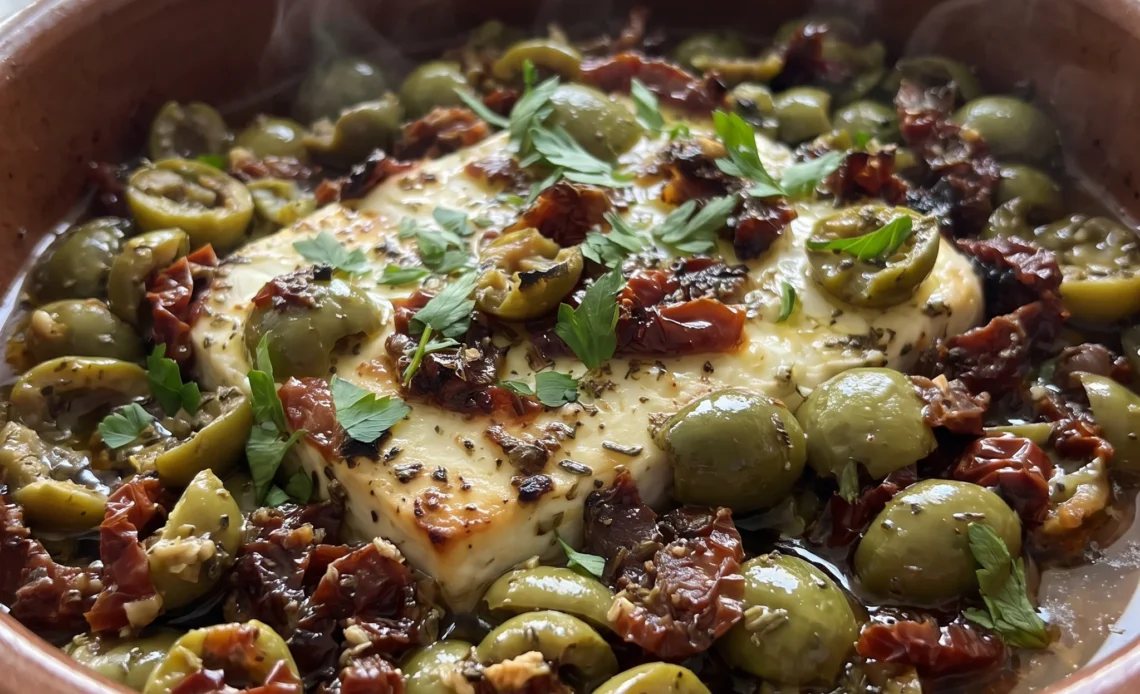
People ask why their baked feta goes grainy, and it’s almost never the cheese. The margin between soft and scoopable is narrow, maybe a couple of minutes wide, and a block packed in brine releases more water than you’d expect once the oil heats around it. A whole slab holds together where crumbles dissolve into salty paste, which is why the block matters here.
Push the olives and tomatoes to one side and you get two textures in one dish: bare, creamy cheese on one half, a dense pile of brine and sweetness on the other. Get the give right and it’s a centerpiece; overshoot and the middle turns slack.
The window is real, and worth watching for.
Why a Whole Block of Feta Instead of Crumbles?
Crumbled feta in a hot oven gives up its identity. The little pieces seep into the oil and turn into a salty sludge, and you lose the pleasure of cutting into a distinct slab. A whole block keeps its shape as it warms, turning soft and scoopable inside while the outside stays just firm enough to hold together on a plate.
The oil-based topping acts like a blanket, insulating the cheese so it doesn’t dry out or crack. Pushing most of the olives and sun-dried tomatoes to one side creates a thicker, more concentrated pile on half the block, so some bites come with a heap of topping and others are mostly cheese. The block format is what makes that contrast possible.
You get a spreadable center and a topping that stays where you put it.
What Do Oregano, Thyme, and Basil Bring to Baked Feta?
Together they build the familiar taste of the Mediterranean without any one herb shouting over the others. Oregano delivers an earthy, slightly bitter punch that stands up to salty feta and oily olives. Thyme adds a softer, floral note that rounds out the edges, and basil brings a gentle sweetness that keeps the whole thing from tasting flat.
Dried herbs need a little time in the oil to wake up; as the dish bakes, they plump and release their flavor into the oil, which then coats the cheese. Red pepper flakes go in for a slow, background warmth that cuts through the richness of the feta and oil without turning the dish spicy. Fresh parsley gets scattered on at the end, after baking, because its bright, clean taste would disappear in the oven.
That final handful gives a fresh contrast to the deep, roasted flavors underneath.
The Role of Olive Oil in This Baked Feta
That third of a cup of oil does more than just keep things from sticking. It covers the feta completely and creates a shallow poaching environment in the oven, so the cheese softens evenly instead of drying at the edges. The oil also pulls flavor from the garlic, herbs, and red pepper flakes as it heats, then carries those flavors right into the surface of the feta.
Use a good extra virgin olive oil here, one with a fruity, peppery finish, because its character comes through in every bite. Once baked, the oil mingles with the juices from the olives and sun-dried tomatoes, turning into a warm, savory dip. That’s what you want for dragging crostini or cucumber slices through.
Too little oil and the feta stays tight and dry; too much and the dish turns greasy. The amount here hits the right mark.
Texture and Heat: Getting Baked Feta Just Right
Baked feta walks a line between soft and collapsed. Its high salt content and lower moisture, compared to something like mozzarella, mean it won’t melt into a puddle. Instead it turns creamy and scoopable inside while the exterior stays slightly firm.
Olives and sun-dried tomatoes, though, will scorch if left exposed to strong, direct heat. The layer of oil covering them shields the toppings and keeps them from burning.
If you choose to run the broiler at the end, stay right there at the oven door; those extra minutes can mean the difference between a lightly browned surface and a burnt, bitter topping. The goal is a warm, softened topping that still tastes sweet and briny, not charred.
When you pull it out, the feta should give easily under a spoon but still hold its shape on the plate.
What to Look For in the Feta, Olives, and Sun-Dried Tomatoes
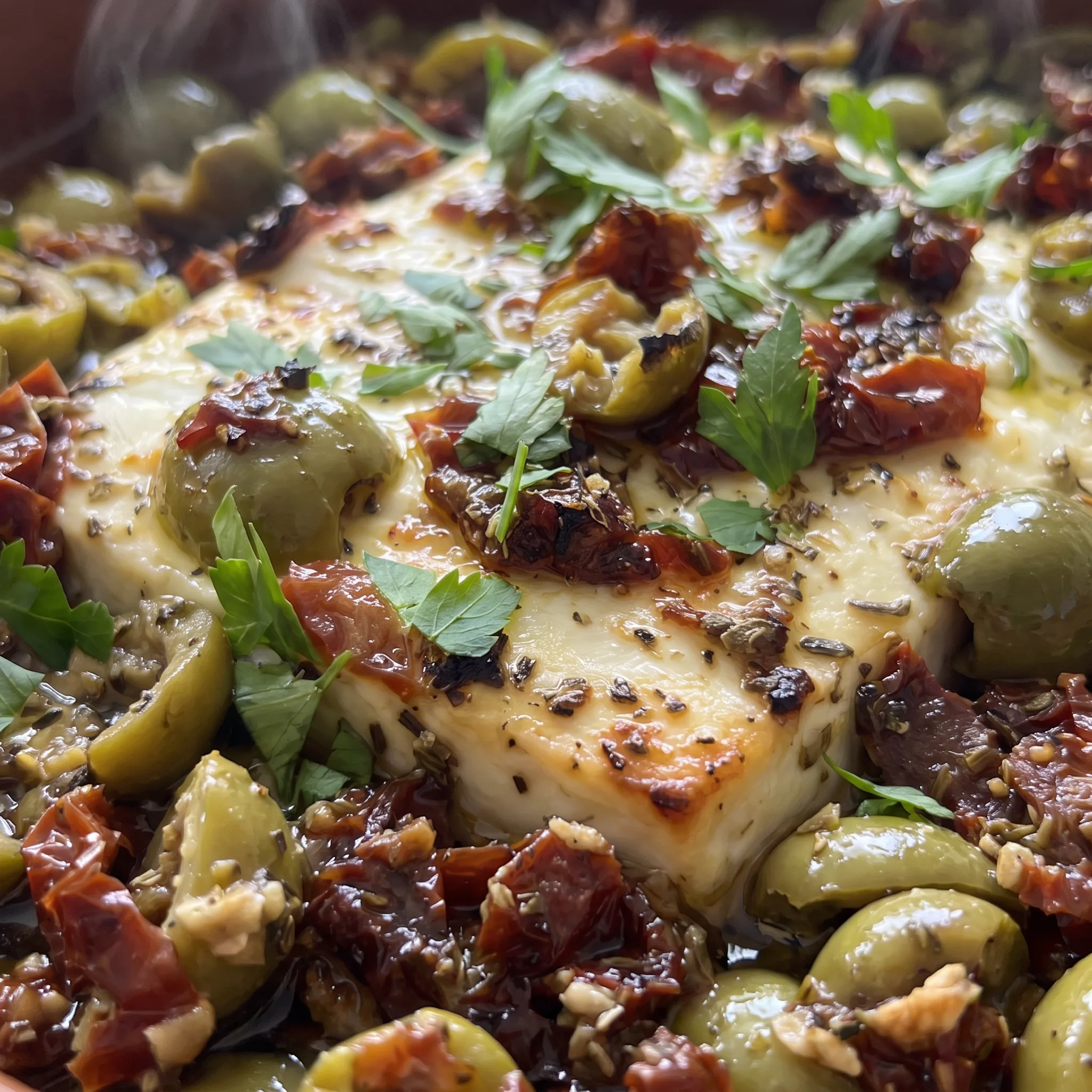
feta cheese: Buy a block packed in brine, not pre-crumbled, so it stays creamy inside and holds its shape.
olives: Choose firm, brine-cured olives and halve them yourself; soft ones break down and turn the oil murky.
sun-dried tomatoes: Oil-packed sun-dried tomatoes beat dry ones here; they’re already plump and bring a richer, sweeter bite.
garlic cloves: Mince the garlic fresh; the jarred stuff tastes flat and won’t infuse the oil the same way.
Feta is a brined, high-salt, low-moisture cheese that softens in the oven but does not melt into a sauce; without a full blanket of olive oil, its exterior dries and toughens before the interior becomes creamy. The oil also shields the chopped olives and sun-dried tomatoes from direct oven heat, since those small pieces can scorch quickly if left exposed. The optional broiler step is especially risky because it applies intense top-down heat that can burn the toppings in under a minute.
How to Read Baked Feta as It Cooks
Judging the feta’s give through the oil
At the early stage, the block feels solid and cool under the oil. As it bakes, press the center gently with a spoon; you want it to yield like thick custard, not collapse or resist.
If it still feels firm after 20 minutes, give it a few more. If it slumps, you’ve gone too far and the texture turns grainy.
The window is narrow, so check at 20 minutes and then every couple of minutes.
Catching the broiler before the olives char
The broiler is a two-minute sprint at most. Stand at the door and watch the surface: the feta should turn a light golden brown in patches, and the olives and sun-dried tomatoes should glisten, not blacken.
The moment you see dark spots forming on the toppings, pull the dish. Burnt olives turn acrid and bleed bitterness into the oil, and no amount of parsley fixes that.
If you smell something sharp and toasty, it’s already too late.
Tasting the oil for balance before serving
The oil at the bottom is your best indicator of seasoning. Spoon a little out and taste it: it should be savory, a bit salty from the feta, with a warm hum from the red pepper flakes.
If it tastes flat, a pinch of salt stirred into the hot oil will wake it up. If it’s too salty, a squeeze of lemon or a splash of fresh oil can pull it back.
This is the last chance to adjust before it hits the table.
Knowing when the topping is warm enough to eat
The olives and sun-dried tomatoes should be hot all the way through, not just on the surface. Poke one with a knife; if it’s still cool in the center, the dish needs another couple of minutes. Cold toppings against hot feta make for a jarring bite, and the oil won’t have picked up their flavor yet.
The goal is a uniform warmth that lets the brine and sweetness come forward.
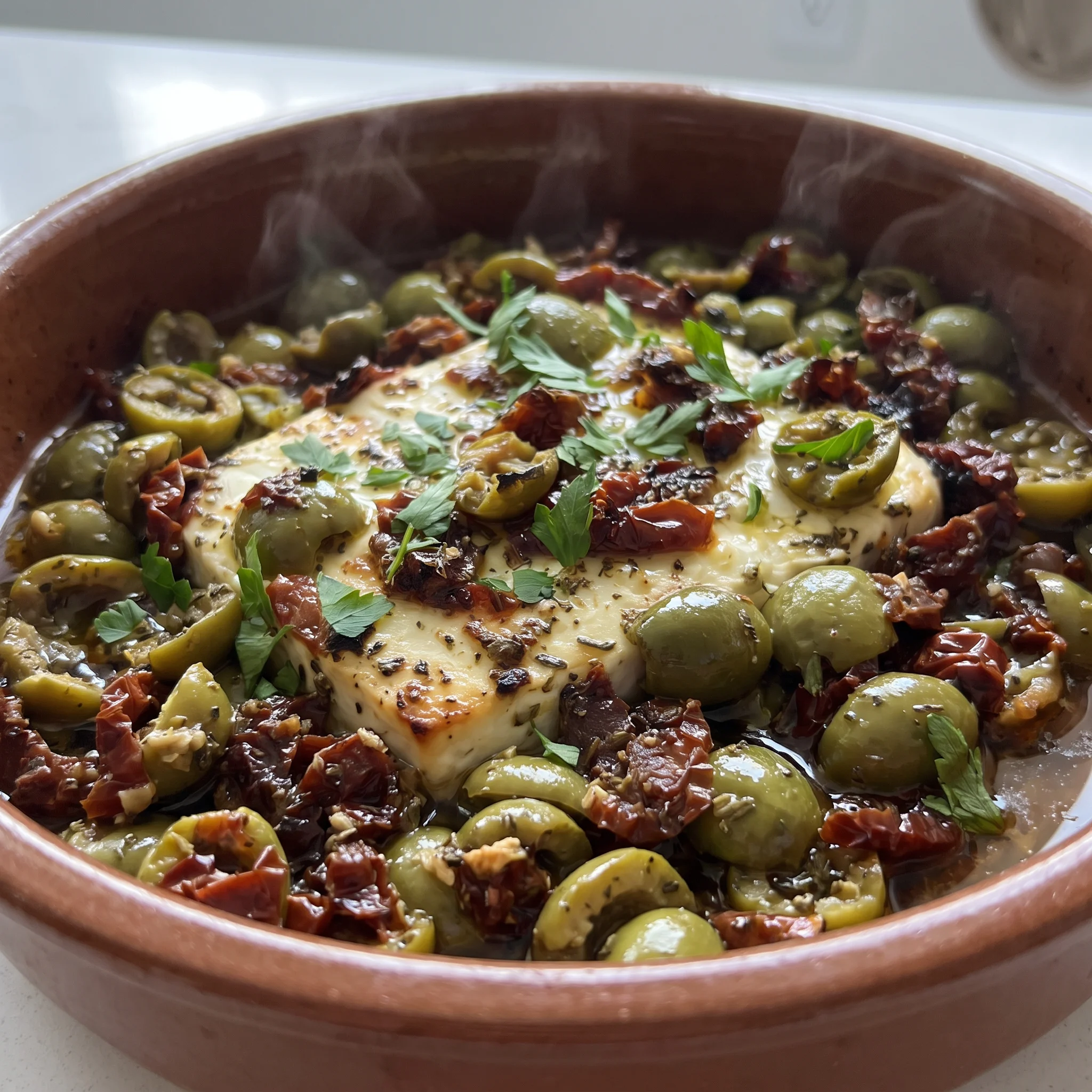
Mediterranean Baked Feta with Olives and Sun-Dried Tomatoes
Ingredients
Method
- Set oven to 350°F (175°C). Put the feta cheese into a small baking dish.
- In a medium mixing bowl, stir together the olives, sun-dried tomatoes, oil, garlic, oregano, thyme, basil, red pepper flakes, salt, and pepper until thoroughly combined.
- Spread the topping over the feta, ensuring it is completely covered with oil, then move most of the olives and sun-dried tomatoes to one side.
- Bake for 20 to 25 minutes, until the feta becomes soft. If desired, activate the top broiler for 1 to 2 minutes to lightly brown the feta’s surface, watching closely to prevent burning the olives and sun-dried tomatoes. Sprinkle with freshly chopped parsley and serve alongside crostini or cucumber slices.
How to Store and Reheat Baked Feta
Baked feta holds up well in the fridge, covered tightly, for up to 3 days. Press plastic wrap directly onto the surface so the oil doesn’t pick up fridge odors, or transfer everything to a small container with a lid. The feta will firm up as it chills, losing that spoonable softness it had straight from the oven.
Reheat gently in a 300°F oven, covered, for about 10 minutes, or in short bursts in the microwave. High heat makes the oil separate and the cheese grainy, so go slow. Eat it within 30 minutes of baking for the best texture, while the feta is still soft and the oil is warm.
If you’re making it ahead, bake it, cool it, refrigerate it, then reheat and scatter the parsley just before serving. Don’t freeze the assembled dish; the feta turns crumbly and the oil splits.
The olives and sun-dried tomatoes freeze fine on their own if you have extras.
Tips
- Pat the feta block dry with paper towels and let it sit at room temperature for about 15 minutes before it goes into the dish. A cold block takes longer to soften in the center, so the outer edges sit in the hot oil and brown before the middle turns creamy. Fifteen minutes takes the chill off without letting the cheese sweat enough to water down the oil.
- Mix the topping in a bowl wide enough to hold the olives and sun-dried tomatoes in a single layer, and stir gently with a spatula rather than a spoon. Halved olives and chopped sun-dried tomatoes have soft exposed faces, and rough stirring tears them, releasing pulp that clouds the oil before it ever reaches the oven. A few folds to coat everything in oil is all this needs.
What You Can Swap in Baked Feta (and What Will Ruin It)
feta cheese: A firmer sheep’s-milk feta or a Greek-style block works; skip crumbles. Sheep’s-milk feta brings a sharper tang and holds its shape better under the oil.
Crumbles, though, dissolve into the oil and turn the whole dish into a salty paste. Buy the block packed in brine, not the pre-crumbled stuff.
If you can only find crumbles, pack them tightly into a single layer, but expect a softer, less distinct result.
olives: Any pitted brine-cured variety: Kalamata, Castelvetrano, or green. Avoid oil-cured.
Brine-cured olives keep a firm bite and release salty juices into the oil. Oil-cured olives turn bitter after 20 minutes in the oven and bleed an acrid taste. Halve them yourself; pre-halved olives are often soft and break down into murky bits.
If you use very salty olives like Kalamata, reduce the added salt to a pinch.
sun-dried tomatoes: Oil-packed vs. dry-packed rehydrated. Oil-packed sun-dried tomatoes are plump, sweet, and ready to use.
Dry-packed ones need a 10-minute soak in hot water, then drain and pat dry; they’re chewier and less sweet. If you use dry-packed, add an extra tablespoon of olive oil to the topping and taste the mix before baking.
Either way, chop them roughly so they don’t overpower a bite.
olive oil: Any good extra virgin olive oil; no need for a fancy single-estate bottle. A fruity, peppery oil carries the garlic and herbs into the feta.
A bland oil leaves the dish tasting flat. You need enough to completely cover the cheese and toppings; the recipe’s 1/3 cup does that. Don’t reduce it or the feta will dry at the edges.
If you swap in a stronger oil, taste the raw mix first to make sure it isn’t bitter.
Frequently Asked Questions
Can I make this baked feta ahead of time and reheat it?
Yes, and the flavor actually deepens overnight as the garlic and herbs keep steeping in the oil. Bake it, let it cool, cover it tightly, and refrigerate; the feta firms up cold, so don’t judge the texture until it’s reheated. Warm it covered in a 300°F oven for about 10 minutes, or microwave it in short bursts, and scatter the parsley after.
Eat it within 30 minutes of that reheat for the softest texture.
Why did my baked feta turn out watery?
Most likely the feta itself: a block packed in brine carries a lot of water, and some brands release more than others once they hit the heat. Pat the block dry before it goes in the dish, and check that the oil actually covers the surface rather than pooling around the sides.
A second culprit is wet olives or sun-dried tomatoes straight from a rinsed jar; drain them well and blot them. If the dish still looks loose, spoon off the excess liquid before serving, but don’t dump the oil, that’s where the flavor lives.
How is this different from the viral TikTok baked feta pasta?
That version turns the feta into a sauce for a pound of pasta, with tomatoes and sometimes spinach cooked alongside it. Here the feta stays a block you cut into, and the olives and sun-dried tomatoes stay chunky on top instead of breaking down into a sauce. It’s a spread or a side, not a pasta dinner.
The herb mix and the push of toppings to one side also give you distinct bites rather than a uniform sauce.
What should I serve with baked feta besides crostini?
Cucumber slices are the obvious move, but think about what else can drag through the warm oil: endive leaves, celery hearts, or thick wedges of roasted potato. A bowl of orzo or farro works too, spoon the feta and oil over it and let the grains soak up the juices. If you’re serving it as a starter, a handful of peppery arugula on the side cuts the salt.
Just avoid anything too soft that’ll collapse under the weight of the topping.
