
Wild rice takes close to an hour to soften, and it’s the one part of this autumn wild rice soup you can’t rush or fake with a shortcut grain. The payoff is a pot that thickens on its own, the grains throwing off enough starch that no roux or cream is needed. Old Bay and a can of coconut milk do the rest, giving a vegetable base a depth that reads richer than what went into it.
Where cooks stumble is timing: pull the rice too early and it’s chalky, let it go too long and the grains blow apart into a cloudy, uniform pot. The window between those is wider than you’d think, which is why this soup forgives a distracted cook.
Everything simmers in one pot, and the last two additions take barely a stir.
What Wild Rice Brings to the Pot
Wild rice isn’t a rice at all, it’s the seed of an aquatic grass, and that difference shows up in the bowl. The grains stay firm and chewy, with a nutty flavor that holds its shape even after a long simmer.
As they cook, they release starch into the broth, which thickens the soup without any flour or cream. That starch is why the finished pot has a hearty, spoon-coating consistency, and why one cup of uncooked rice stretches across eight servings. Undercook it and you’ll feel a gritty bite against your teeth; overcook it and the grains split open, turning the broth cloudy and the texture soft.
The sweet spot is when the grains have just opened, still separate but tender. You can tell by pressing one to the touch, it should give with a little resistance, not fight back. That’s when the soup hits its stride: rich, satisfying, and full of texture.
Old Bay Makes This Soup What It Is
The spice blend is doing more work here than any other single ingredient. Celery salt, paprika, black pepper, and a handful of warm spices come together in Old Bay, and that combination gives the soup its savory, slightly spicy backbone.
One and a half tablespoons is a generous amount, but it’s calibrated to stand up to six cups of stock and a pile of vegetables. Use less and the broth tastes flat, like something is missing; use more and it bullies the sweet potato and mushrooms into the background. Because Old Bay already contains salt, hold off on adding extra until you’ve tasted the finished soup.
A pinch of salt might be all it needs, or a little more Old Bay if you want the spice to come forward. The way the seasoning plays against the natural sweetness of the potato and the earthiness of the mushrooms is what makes this pot taste like autumn.
Coconut Milk for Creaminess Without Dairy
Coconut milk brings a quiet richness to the broth, along with a faint sweetness that rounds off the edges of the spice blend. Full-fat canned coconut milk is what you want; the light versions are mostly water and will leave the soup thin.
You add it after the vegetables and rice have cooked, because high heat can cause the fat to separate and the texture to turn grainy. Once it’s in, stir gently and keep the pot off a rolling boil. The soup should look silky, with a sheen on the surface, not broken or curdled.
If you’ve ever seen a curry split, you know the look. Here, the goal is a smooth, cohesive broth that coats the back of a spoon.
The coconut flavor itself is subtle, more about body than a tropical note, and it lets the Old Bay and sweet potato lead.
Kale Added Late Keeps Its Bite
Two big handfuls of chopped kale go in at the end, and that timing is deliberate. Kale is a sturdy green, but hot liquid softens it fast, and if it sits too long it turns limp and dull.
You want it to wilt just enough to lose its raw edge while keeping some chew and a deep green color. The residual heat of the soup is plenty to get it there. Stems removed, the leaves fold into the broth and add a slightly bitter, earthy note that cuts through the sweetness of the sweet potato and coconut milk.
That contrast is what keeps each spoonful interesting. You’ll see the kale darken and shrink within a minute or two of stirring, and that’s your cue that it’s ready. Any longer and it starts to fade, both in color and in flavor.
Serve while the leaves still have a little life to them.
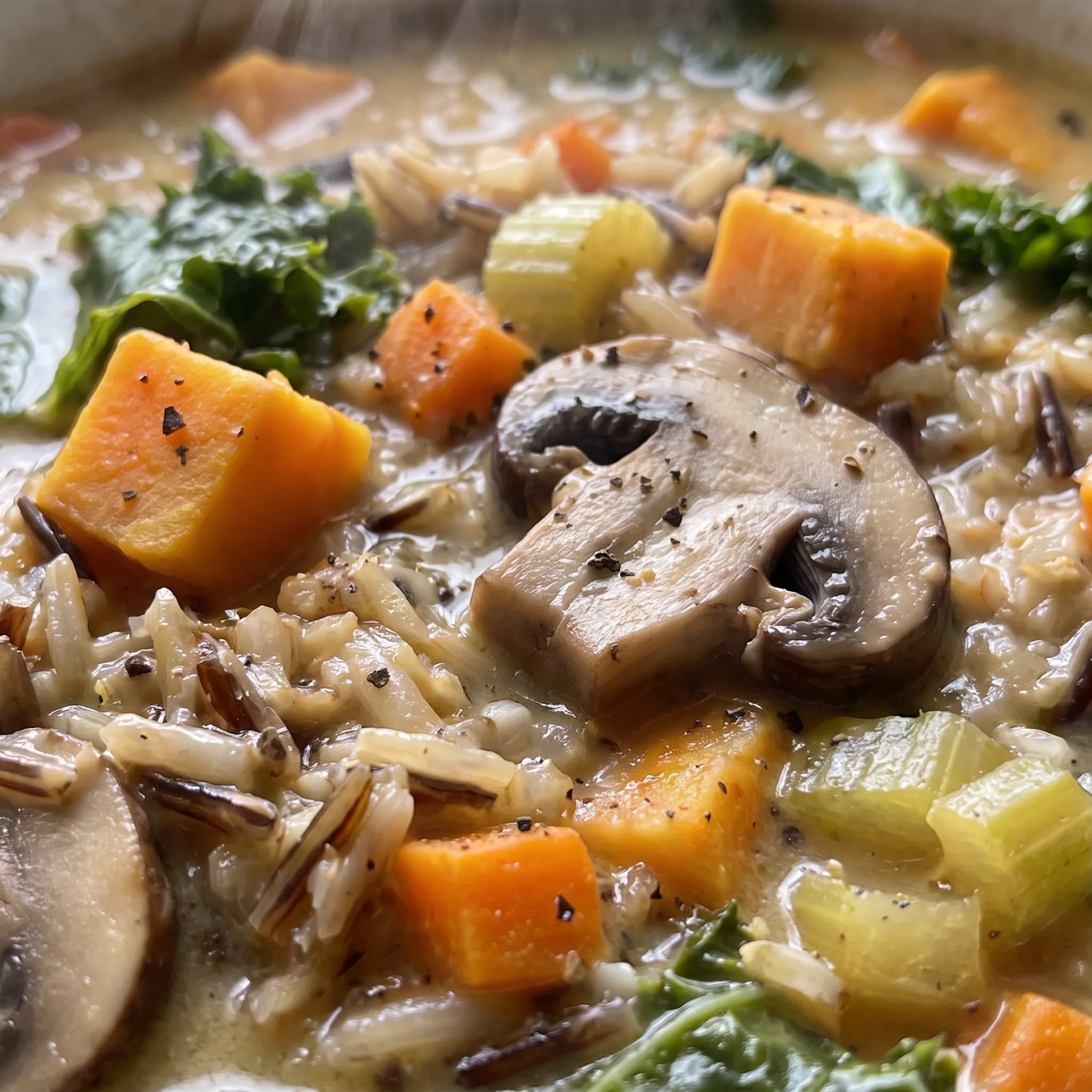
What to Look For Before This Soup Hits the Pot
Wild rice: Buy true wild rice, not a quick-cooking blend, because the long-cooking grains give the chewy texture and starch that thickens the broth.
Old Bay seasoning: Check the date on your tin; the spice blend fades after a year or so and the soup will taste flat without its savory backbone.
Unsweetened coconut milk: Use full-fat canned coconut milk, not the light kind, which is mostly water and leaves the broth thin instead of silky.
Sweet potato: Pick a firm, heavy one with no soft spots, since a large sweet potato holds its shape better than a shriveled or sprouted one.
Baby bella mushrooms: Choose dry, firm caps with tight gills, because wet or slimy mushrooms turn rubbery and dull the earthy flavor.
The Moments That Decide How This Soup Turns Out
Reading the rice when you open the lid
After the pressure releases, pull out a few grains. They should be swollen and split open, with a chewy center that gives under your teeth.
If they’re still firm or chalky, the rice needed more time. Lock the lid and cook for 2 to 3 minutes more on high pressure, then quick release. If the grains have collapsed into a soft, cloudy mass, you’ve gone too far; the soup will still taste good, but the texture will be uniform rather than varied.
The broth should look slightly thickened from the rice starch, not watery.
Tasting before you add salt
Old Bay is salty, and the stock may be too. After the coconut milk and kale go in, taste a spoonful of broth with some vegetables.
If it tastes flat, add a pinch of salt. If it tastes sharp or metallic, you’ve oversalted; a splash of water or extra coconut milk can dilute it. If the spice is there but muted, a little more Old Bay brings it forward.
The goal is a broth that tastes savory and gently spiced, not salty or hot. Adjust in small increments, stirring and tasting after each.
Knowing when the coconut milk is incorporated, not broken
Pour it in and stir gently. The broth should turn opaque and silky, with a slight sheen on the surface.
If you see tiny flecks of fat floating separately or a grainy texture, the soup was too hot or you stirred too vigorously. Keep the pot off a rolling boil from here on. A broken broth still tastes fine, but the texture is less smooth.
To bring it back, whisk in a spoonful of cold coconut milk or a little cornstarch slurry, then warm gently without boiling.
Judging the kale’s wilt
Add the chopped kale and stir it into the hot soup. Within a minute or two, the leaves should darken and shrink, losing their raw edge but keeping a slight chew. If they turn olive-drab and limp, they’ve overcooked; the flavor turns dull and slightly bitter.
If they stay stiff and bright, they need another minute. The soup is ready when the kale is tender but still has some body. Fish out a leaf and bite it: it should taste sweet and earthy, not grassy or mushy.
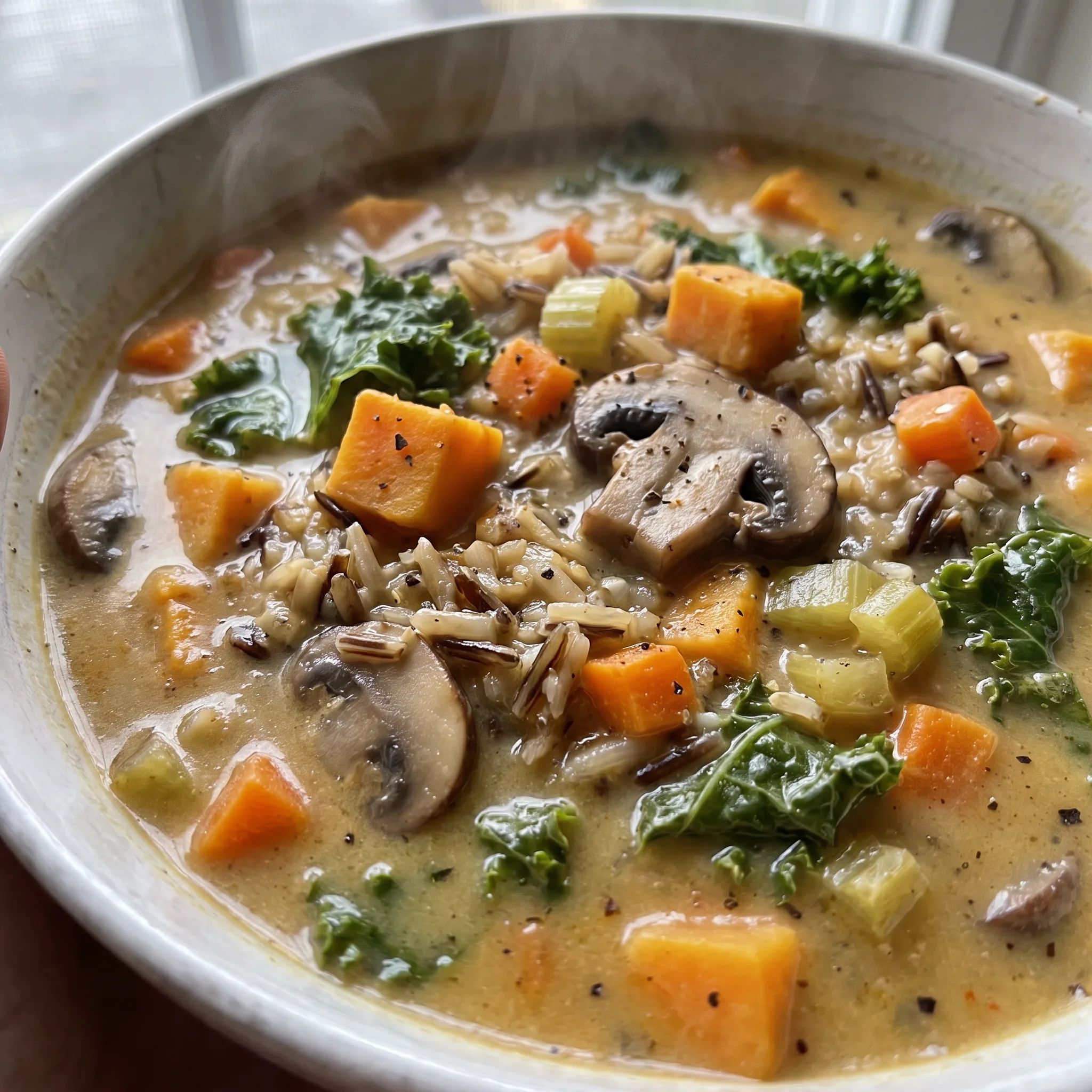
Cozy Autumn Wild Rice Soup with Sweet Potato
Ingredients
Method
- Instant Pot: In the bowl of an Instant Pot pressure cooker, combine vegetable stock, wild rice, mushrooms, garlic, carrots, celery, sweet potato, onion, bay leaf, and Old Bay seasoning. Stir briefly to combine.
- Instant Pot: Cover and cook on manual (high pressure) for 25 minutes. Let the Instant Pot rest and naturally release pressure for 10 minutes. Carefully open the vent and quick release remaining pressure. Remove lid and discard bay leaf.
- Instant Pot: Add coconut milk and kale to the soup; stir gently until combined. Taste and season with salt, pepper, and extra Old Bay seasoning if desired.
- Instant Pot: Serve warm and enjoy.
- Stovetop: Heat 1 tbsp butter or olive oil in a large stockpot over medium-high heat. Add onion and sauté for 5 minutes, stirring occasionally, until soft and translucent. Stir in garlic and cook for 1–2 minutes, stirring occasionally, until fragrant.
- Stovetop: Add vegetable stock, wild rice, mushrooms, carrots, celery, sweet potato, bay leaf, and Old Bay seasoning. Stir to combine.
- Stovetop: Continue cooking until soup reaches a simmer. Reduce heat to medium-low, cover, and simmer for 30–40 minutes until rice is tender, stirring occasionally.
- Stovetop: Add coconut milk and kale; stir gently until combined. Taste and season with salt, pepper, and extra Old Bay seasoning if desired.
- Stovetop: Serve warm and enjoy.
What You Can Change in This Autumn Wild Rice Soup (and What You Can’t)
Wild rice: A wild rice blend or brown rice. These cook faster and absorb less liquid, so the soup may end up thinner and the grains less chewy. If you use a blend, start checking at 20 minutes in the Instant Pot or 25 minutes on the stovetop.
You might need to add extra stock to reach the right consistency.
Unsweetened coconut milk: Light coconut milk or heavy cream. Light coconut milk is mostly water and leaves the broth thin instead of silky. Heavy cream adds richness but no coconut flavor; add it off the heat and stir gently to avoid curdling.
For a cream sauce option, see the note below.
Vegetable stock: Chicken stock. Chicken stock brings a deeper, more savory flavor that some prefer.
Use the same amount. If you’re keeping it vegetarian, stick with vegetable stock.
Old Bay seasoning: No good substitute. Old Bay is the flavor backbone here; other spice blends won’t match its celery salt and paprika profile. If you must, use a pinch of celery salt, paprika, and black pepper, but the soup will taste different.
Tips
- Rinse the wild rice in a fine-mesh strainer under cold water for about 30 seconds, agitating the grains with your hand, then pick through them for small stones or dark foreign bits. Wild rice is a field-harvested grass seed, so it carries dust and the occasional pebble from the paddy, and a single stone will crack a tooth in an otherwise soft bowl of soup. The rinse also washes off surface starch that would otherwise cloud the broth before the grains even start cooking. Drain it well before it goes into the pot so you don’t throw off the six cups of stock.
How to Store and Reheat This Soup Without Losing Its Texture
The soup is best the day it’s made, while the kale still has a little bite and the rice hasn’t absorbed much broth. Leftovers keep in the fridge for 3 to 4 days in a sealed container, but the wild rice keeps drinking liquid the whole time.
By day two, the soup thickens into something closer to a stew. That’s expected, not a flaw.
To reheat, ladle out a portion and warm it gently on the stovetop or in the microwave, then add a splash of stock or coconut milk until it flows like soup again. The kale fades to olive-drab past day two and loses its fresh chew, so if you know you’ll be eating leftovers for several days, consider adding fresh kale to each bowl instead. This soup doesn’t freeze well because the rice turns grainy and the coconut milk can separate.
If you must freeze, do it before adding the coconut milk and kale, then finish those in after thawing.
The most common mistake is treating wild rice like ordinary rice, either by shortening its cook time or by boiling it hard. Because the grains are dense and hulled, they stay gritty and chewy if pulled early, while aggressive boiling makes the outer bran burst before the center is tender, releasing starch that turns the soup gluey. The fix is to give the rice a long, low simmer and to judge doneness by tasting a grain rather than by the clock.

Frequently Asked Questions
Can I make this soup ahead of time and reheat it?
You can, but the wild rice keeps absorbing broth, so by the next day the pot thickens toward a stew. The storage section covers the fridge life and the splash of stock or coconut milk that brings it back to a soup consistency.
If you want the kale to keep its bright color and slight chew, add it fresh to each bowl instead of letting it sit. The coconut milk is already in, so just warm gently and don’t let it boil.
Why did my wild rice turn out hard or chewy?
Most likely you’re dealing with old rice or a quick-cooking blend, which never softens the same way. True wild rice should split open and give under your teeth; if the grains stay chalky, the rice itself is the culprit.
Check the package date, and if it’s a blend, expect a shorter cook and a different texture. If you used true wild rice and it’s still firm after the full cook, the grains were probably past their prime.
How does this soup compare to traditional chicken wild rice soup?
Traditional versions lean on cream and chicken, so the broth is heavier and the flavor more straightforward. This one gets its body from the rice starch and coconut milk, which keeps it dairy-free and a bit lighter on the tongue. Old Bay replaces the usual thyme and pepper, giving it a savory, gently spiced edge that plays against the sweet potato.
You won’t miss the chicken; the mushrooms and sweet potato carry the heartiness.
What should I serve with this soup to make it a full meal?
A hunk of crusty bread does the job, mostly for sopping up the broth that clings to the spoon. If you want more substance, a simple green salad with a sharp vinaigrette cuts through the richness. Keep it light otherwise; the soup already has rice, sweet potato, and kale, so it’s a meal on its own.
A glass of something crisp, like a dry white or a light beer, works better than anything heavy.
