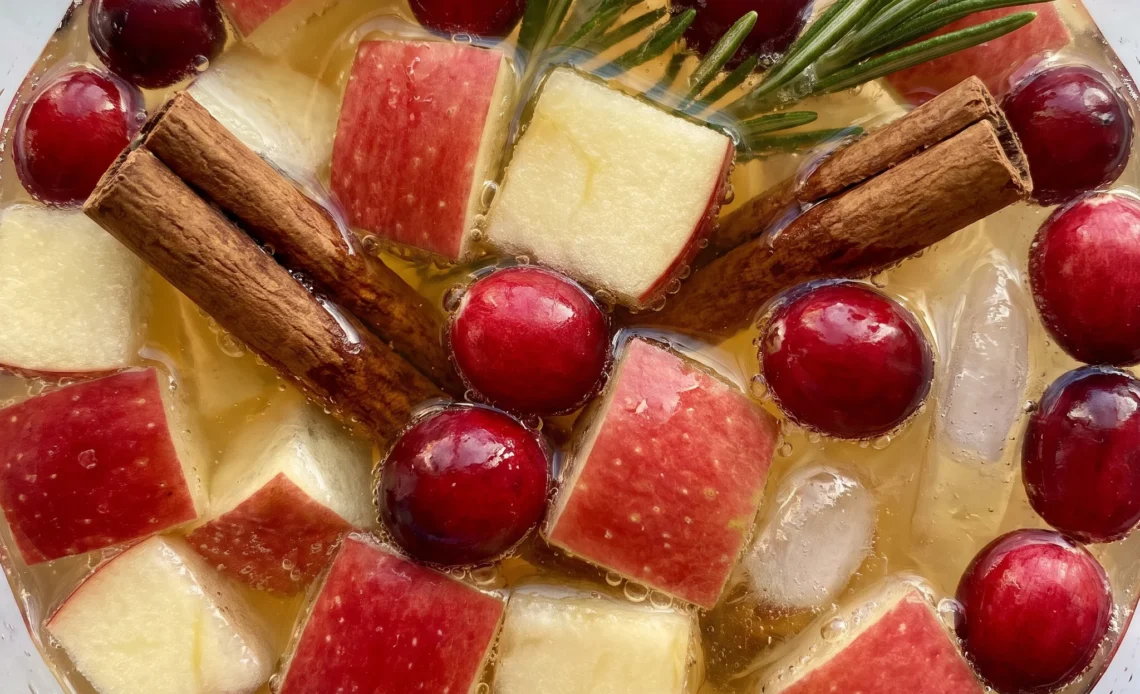
Most white sangria tastes like fruit juice that got into the wine. The fix happens before anything touches the pitcher: start with a bottle that’s genuinely dry, not one labeled off-dry or oaked, because orange liqueur and white cranberry juice are already sweet and there’s no walking that back later. Cranberries are unforgiving here.
They’re harsh for the first hour or two and only settle once the apple gives up some juice and the cinnamon rounds off the sharper edges. Get the wine right and a white christmas sangria stays crisp enough to drink past the first glass, which is the whole reason to bother with a white version instead of pouring red. The garnish is what sells the season anyway, and the liquid underneath it should taste like wine.
Dry Wine Keeps the Fruit in Check
Pick a wine that’s dry and brisk, like Sauvignon Blanc, Chardonnay, or Pinot Grigio. Those grapes carry enough acidity to cut through the orange liqueur and white cranberry juice, so the pitcher tastes fresh instead of syrupy. A sweet wine would stack sugar on sugar, and after four hours in the fridge the whole thing would drink like candy.
The wine is the base, and its job is to carry the fruit without turning into a fruit cup. You want the apple and cranberries to read as accents, not the whole show.
When you taste a spoonful before chilling, the wine should still be recognizable underneath the citrus and berries. That’s your sign the proportions are right and the drink will stay lively over ice. If it already tastes heavy at that point, the wine was too sweet or too oaky, and no amount of lime will fix it.
Why Four Hours in the Fridge Matters
Four hours is the sweet spot for the fruit to give up its flavor and the cinnamon to soften into the background. During that time, the apple cubes lose their raw crunch and the cranberries turn from tart little bullets into something you actually want to eat. The wine pulls color and aroma from both, and the cinnamon sticks quietly season the whole batch.
Skip the chill and you’re drinking cold wine with floating fruit. The flavors sit apart, sharp and disjointed, and the cinnamon never gets a chance to do its work.
There’s nothing to stir or check on. You just park the pitcher and let time do the heavy lifting.
I’ve found that the difference between two hours and four is the difference between a decent drink and one where the fruit, spice, and wine taste like they belong together. After four hours, the liquid should look faintly pink and smell like a holiday kitchen.
Save the Soda for the Last Minute
Lemon-lime soda brings two things: a little sweetness and a lot of fizz. That carbonation is fragile. Leave it in the pitcher during the long chill and it escapes into the air, leaving you with a flat, dull drink that tastes like sweet wine and juice.
Pour it in right before you serve, give it one gentle stir, and you get that prickly lift that makes sangria refreshing instead of heavy. The soda also adds a citrus note that ties the orange liqueur and lime juice together. Don’t skip it, and don’t add it early.
You’ll know it’s right when the first sip has a light sparkle on the tongue and the finish stays clean. If you’re not serving all six glasses at once, add soda only to the glasses you’re pouring, not the whole pitcher. That way the leftovers keep their fizz for a second round.
Garnishes Set the Holiday Mood
A cinnamon stick and a rosemary sprig in each glass do more than look pretty. The cinnamon adds a warm, woody scent that hits you before the first sip, and rosemary brings a piney note that reads as winter without tasting like a forest. Both are optional, but they turn a simple pitcher into something that feels intentional.
The soaked fruit from the pitcher matters too. Those apple cubes and cranberries have been drinking up wine and spice for four hours, and they’re now soft, boozy, and worth eating with a small spoon.
Dropping a few into each glass means every serving gets a little texture and a little extra flavor. You don’t need to skewer or arrange anything. Just fish them out with a slotted spoon and let them land where they land.
The drink should smell like a holiday market before you even take a sip.
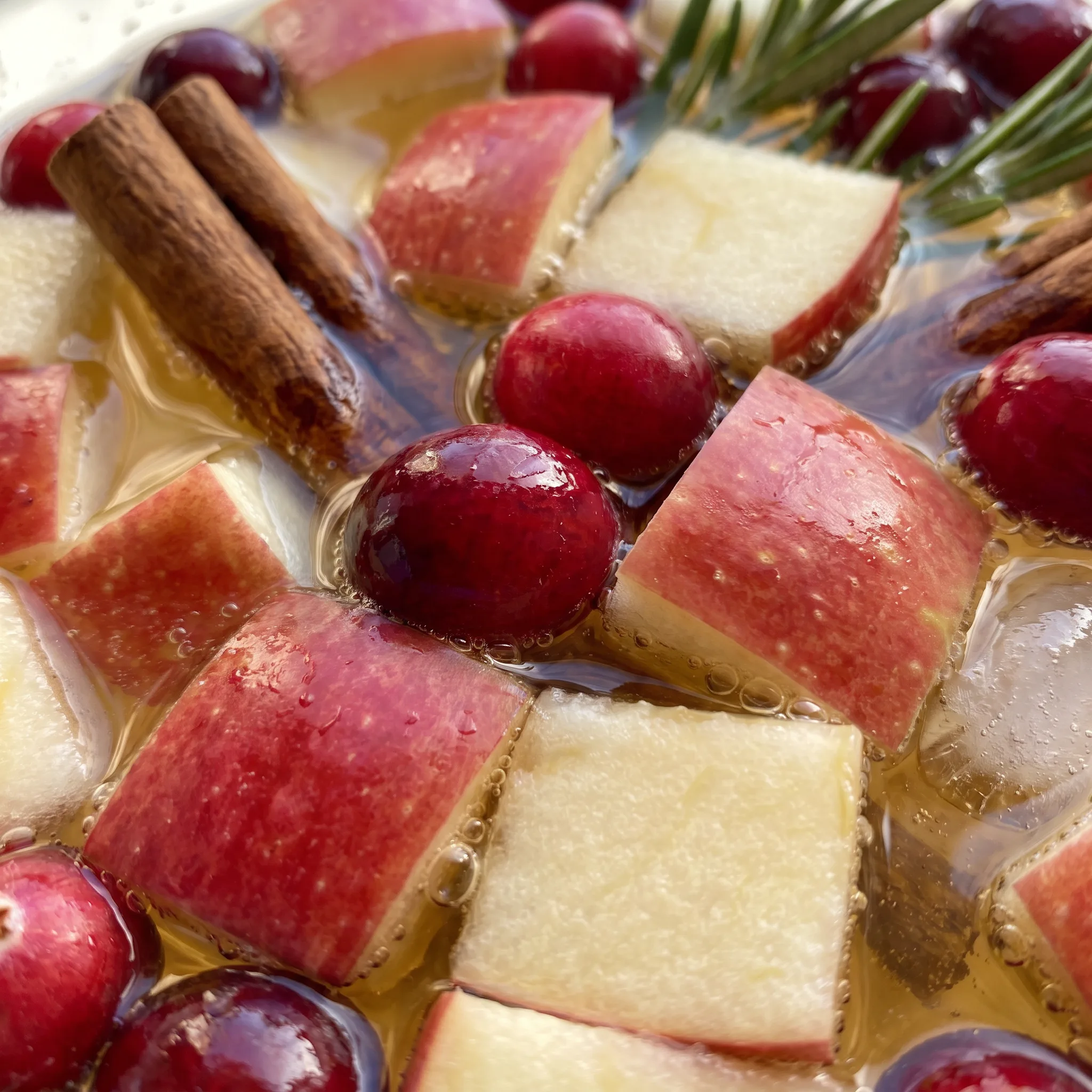
The Ingredients That Make or Break This Pitcher
Dry Sauvignon Blanc: Choose a dry, crisp bottle with bright acidity, not an oaky or sweet one, so the citrus and berries stay in balance.
White cranberry juice: Use white cranberry juice, not red, to keep the sangria pale and let the fruit and wine flavors come through.
Fresh cranberries: Pick firm, bright red cranberries without soft spots; they’ll soften in the fridge and add tartness without turning bitter.
Cinnamon sticks: Use true cinnamon sticks (Ceylon) for a sweeter, more delicate spice; cassia is stronger and can overpower the wine.
Judging the Pitcher Before, During, and After the Chill
The Taste Right After Mixing
Stir everything except the soda and taste a spoonful. The wine should still be recognizable underneath the citrus and berries. If it already tastes sweet and heavy, your wine was too sweet or too oaky, and no amount of lime will fix it.
That’s your cue to switch to a drier bottle for the next batch. Catch it now, before the chill locks in the wrong balance.
The Color at the Four-Hour Mark
After four hours in the fridge, the liquid should look faintly pink. That color tells you the cranberries and apple have given up their juice and the cinnamon has started to season the batch. If it’s still pale and clear, the fruit hasn’t had enough time or the pitcher wasn’t cold enough.
Give it another thirty minutes and check again.
The Fruit’s Texture Before You Pour
Fish out a cranberry and an apple cube. The cranberry should be soft enough to bite through without resistance, and the apple should have lost its raw crunch.
If they’re still firm, the sangria will taste sharp and disjointed. Let it sit longer. You want the fruit to read as an accent, not a chore to chew.
The Soda’s Fizz When You Add It
Pour the lemon-lime soda in just before serving and stir once. You should see bubbles rise and hear a faint hiss. If the soda was opened earlier and lost its carbonation, the drink will taste flat and sweet.
Use a fresh bottle. The first sip should have a light sparkle on the tongue and a clean finish.
If it doesn’t, the soda was too warm or too old.
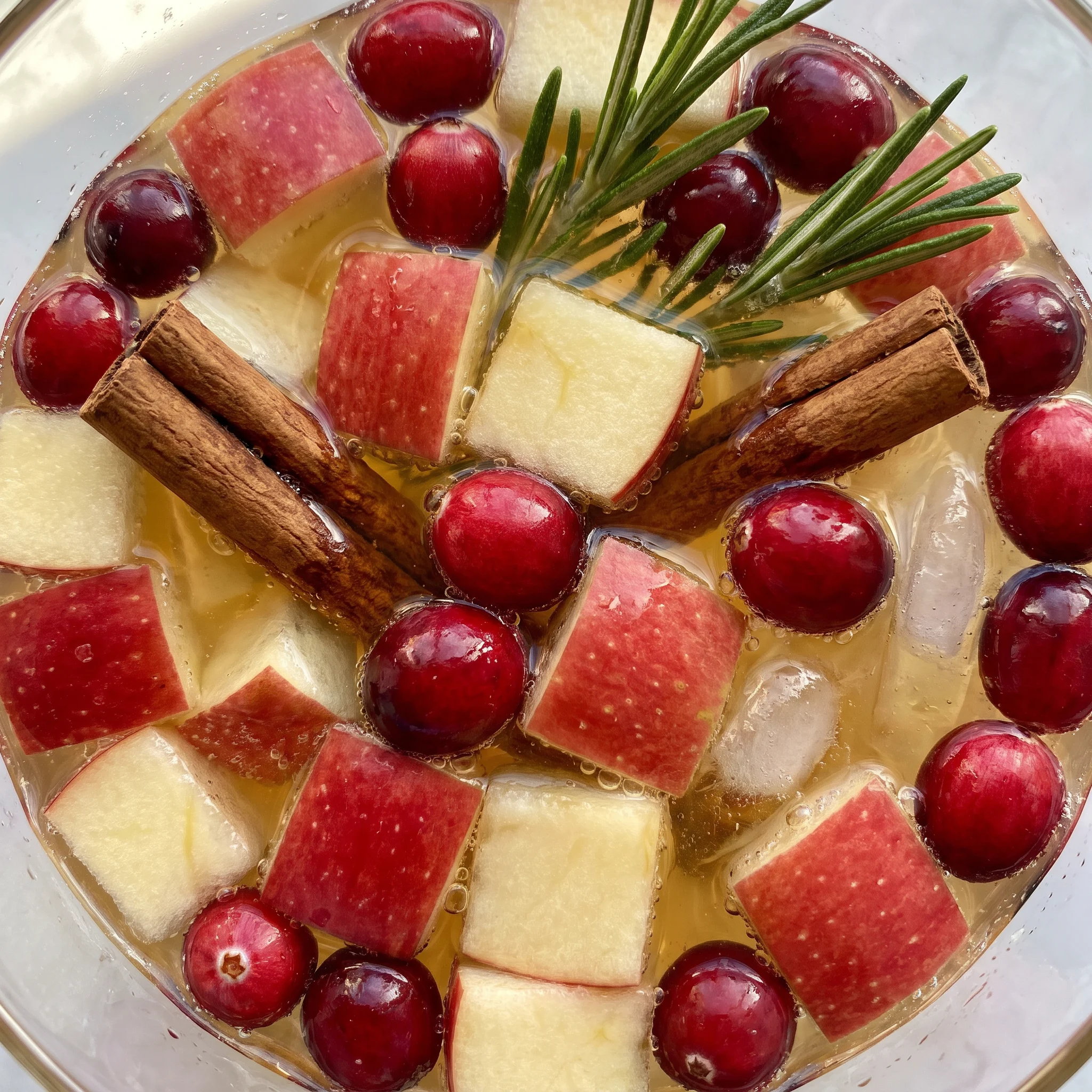
White Christmas Sangria with Cranberries and Apple
Ingredients
Method
- Into a large pitcher, place the cubed red apple, fresh cranberries, and cinnamon sticks.
- Pour in the Sauvignon Blanc, orange liqueur, white cranberry juice, and lime juice.
- Stir well, cover with plastic wrap, and refrigerate for 4 hours to let the flavors meld.
- Just before serving, add the lemon-lime soda and stir; adding it earlier will cause the soda to go flat.
- Pour the sangria into glasses. Garnish with the fruit from the pitcher, cinnamon sticks, and rosemary sprigs, if desired.
Swapping the Orange Liqueur and Wine Without Wrecking the Pitcher
Orange liqueur (Cointreau or Triple Sec): Use the same 1/3 cup of either Cointreau or Triple Sec. Grand Marnier works too, but start with 1/4 cup and taste after stirring, since it’s sweeter and heavier. Cointreau is cleaner and more bitter-orange, so the wine and cranberry stay sharp.
Triple Sec is sweeter and softer, and the pitcher will taste rounder, almost candied, after the four-hour chill. Grand Marnier brings a brandy backbone that can push the drink toward cough-syrup if you use the full measure. Whichever you pick, the orange note should sit behind the wine, not on top of it.
Dry Sauvignon Blanc: Chardonnay or Pinot Grigio, same 750 ml bottle. Skip anything labeled oaky, buttery, or off-dry.
An unoaked Chardonnay gives a slightly rounder mouthfeel and a touch more apple skin, which flatters the fruit. Pinot Grigio is leaner and more neutral, so the cranberries and lime read louder. An oaky Chardonnay will taste like vanilla and toast after four hours, and that fights the cinnamon and rosemary.
If you only have an oaky bottle, use it, but expect a heavier drink and add an extra squeeze of lime before serving.
Cinnamon sticks: Leave them out entirely, or use 1/4 teaspoon ground cinnamon stirred in with the juice. If using ground, taste at the two-hour mark.
The sticks season the batch slowly and leave a warm scent in the glass. Without them, the sangria tastes brighter and more fruit-forward, still holiday-ish thanks to the cranberries and rosemary.
Ground cinnamon works fast and can turn muddy and bitter if it sits the full four hours, so check early and fish out nothing because it won’t strain cleanly. A cinnamon stick in each glass as garnish covers most of what you lose.
Rosemary sprigs: Drop them. Or use a thin strip of orange peel in each glass instead. Rosemary is pure aroma here, no flavor in the liquid.
Skip it and the drink still smells like cranberry and wine, just less piney. Orange peel gives a similar wintry lift without the resinous edge some people find soapy. If you keep the rosemary, bruise the sprig once to the touch before garnishing so it actually releases something.
How Long It Holds and When to Drink It
Drink this within the first day. The four-hour chill is the floor, not the ceiling, and the sangria is at its best somewhere between hour four and hour eight.
Past that, the apple cubes go soft and mealy and the cranberries start to collapse, shedding pulp into the wine. The liquid itself turns dull and slightly bitter as the fruit breaks down. It stays safe in a covered pitcher in the fridge for up to three days, but by day two you’re drinking sweet wine with tired fruit, and that’s a different thing.
Don’t freeze it. The wine and juice expand, the fruit turns to slush, and the carbonation you add later has nothing to work with.
Store leftovers covered, without soda. Add the lemon-lime soda only to the glass you’re pouring right then, half a cup per six servings, stirred once.
A stored portion poured straight from the fridge tastes flat and closed in. Let the glass sit two minutes before you drink it.
Tips
- Taste the sangria after the four-hour chill, before the soda goes in, and adjust with a squeeze of lime if it reads sweet or a splash of white cranberry juice if it reads thin. Cranberries and apples vary in sugar from bag to bag, so the pitcher you made last week can land differently than the one today, and the soda is the last chance to fix the balance without flattening it.
- If you are pouring fewer than six glasses, drop the fruit into the glasses first and pour the wine mixture over it, then top each glass with soda. The apple and cranberries keep steeping in the pitcher either way, but moving them out of the liquid stops them from shedding more pulp into the portion you are saving.
The lemon-lime soda supplies both flavor and carbonation, but carbon dioxide is only soluble in the liquid under pressure or when the drink is freshly mixed. If the soda is added before the four-hour chill, the CO2 molecules diffuse out of the solution and into the headspace of the pitcher, leaving the sangria flat. Stirring or pouring also accelerates this loss, so the fizz must be introduced at the last possible moment.
Frequently Asked Questions
Can I make white Christmas sangria ahead of time?
Yes, but keep the window tight. The four-hour chill is the minimum, and the pitcher drinks best somewhere between hour four and hour eight. Past that the apple cubes go soft and the cranberries start shedding pulp, so the liquid turns dull and slightly bitter.
If you need to work ahead, mix everything except the soda and leave it covered in the fridge, then add the lemon-lime soda only to the glass you’re pouring. A stored portion poured straight from the fridge tastes flat and closed in, so let the glass sit two minutes before you drink it.
Why did my sangria turn out too sweet?
The wine is the usual culprit. An off-dry or oaky bottle stacks sugar on the orange liqueur and white cranberry juice, and after four hours that reads as candy.
Switch to a dry Sauvignon Blanc, Chardonnay, or Pinot Grigio and taste a spoonful right after mixing; the wine should still be recognizable underneath the citrus and berries. If the wine was dry and it’s still sweet, check your orange liqueur. Triple Sec is softer and sweeter than Cointreau, and Grand Marnier brings a heavier, brandied sweetness, so the same pour can tip the pitcher.
A squeeze of lime helps at the edges but won’t rescue a sweet base.
How long can I leave the fruit in the sangria?
Pull the fruit when you pour, not days later. The apple and cranberries are at their best between hour four and hour eight, when the cranberries bite through without resistance and the apple has lost its raw crunch. Leave them in past that and the apple goes mealy while the cranberries collapse and shed pulp, which turns the liquid dull and slightly bitter.
If you’re not serving all six glasses at once, fish the fruit out of the portion you’re storing. The soaked fruit is worth eating with a small spoon, so don’t just toss it.
What is the difference between white sangria and traditional red sangria?
The wine base changes everything about how the drink reads. Red sangria starts from a red wine, often something with a little tannin, and the finished pitcher tastes darker and more structured. This white version uses a dry Sauvignon Blanc, so the apple and cranberries come through as bright accents instead of getting buried under the wine.
White cranberry juice keeps the liquid pale, which is why the color after four hours is only faintly pink. The result is a lighter, more citrus-forward pitcher, and the rosemary and cinnamon garnish push it toward the holiday side.
