
Southern chicken bog fails most often because the cook treats the rice like a pilaf and expects separate, fluffy grains. This is a wetter dish by design, closer to a loose spoonbread of rice and broth, and the pot tells you when it’s right: shake the skillet and the whole thing still moves.
The trouble is that window is narrow. Long-grain rice keeps drinking after it comes off the heat, so a bog that looks soupy on the stove can sit tight and pasty by the time it reaches the table. Bone-in thighs and smoked sausage give you some slack, since their fat and salt season the rice as it simmers, but they won’t fix rice that’s already gone stiff.
If you’ve only had the dry version, you haven’t had this one.
The recipe’s 4:1 broth-to-rice ratio and 30 to 35 minute covered simmer are calibrated for a wet, spoonable chicken bog, but long-grain rice hydrates and softens well before the bone-in thighs finish. Once the grains have absorbed their capacity, continued heat and stirring ruptures them, releasing surface starch that thickens the liquid into a pasty, uniform mass. The final 5-minute stir after shredding compounds this by mechanically breaking down already-tender grains.
Chicken Bog Is a Loose Rice, Not a Pilaf
Chicken bog belongs to the same family as South Carolina chicken pilau, and the family resemblance shows in the pot. The rice should look wet, almost porridge-like, with enough liquid that a spoon stands up in it but the grains still hold a little bite.
That texture is not an accident of careless measuring. Four cups of broth to one cup of long-grain rice is deliberate.
Long-grain releases its starch slowly, so it thickens the broth without turning to paste. During the last five minutes, after the shredded chicken goes back in, stirring breaks some grains down and brings the whole pot together.
You want it spoonable, not stiff enough to mound on a plate. If it tightens up before serving, add a splash more broth and stir. A dry, fluffy pilaf is a different dish entirely.
Bone-In Thighs Build the Savory Base
Bone-in, skinless chicken thighs are not a suggestion here. The bone does two things you can taste: it gives the sear something to cling to, and it simmers into the broth, releasing body that boneless breast never will. When the thighs hit the hot oil, they leave behind a browned fond that later colors the rice.
During the 30 to 35 minute covered simmer, the bones give up richness that makes the finished pot silkier on the tongue. Shredding the chicken after it cooks and folding it back in keeps the meat tender and spreads it evenly through the rice.
Skinless matters because the olive oil already provides enough fat for searing; skin would leave the pot greasy. What you end up with is a deeper, rounder flavor that tastes like it cooked longer than it did.
Spices That Define the Lowcountry Profile
Paprika, turmeric, thyme, and optional cayenne do more than tint the rice. Paprika brings a sweet-smoky base and turns the grains a deep brick red, which is half the visual signature of a proper bog.
Turmeric adds an earthy, slightly bitter edge and a yellow glow that makes the pot look alive. Dried thyme echoes the herbal notes that run through traditional Lowcountry cooking without shouting over the sausage.
Cayenne is there for those who want a slow warmth in the background, not a five-alarm burn. Use it or leave it out; the dish is not meant to be aggressively spicy.
Together these spices bloom when they hit the hot fat and coat the rice, so every grain carries the same seasoning. Taste a spoonful before serving and adjust salt and pepper.
The flavor should be savory first, with spice trailing behind.
Smoked Sausage Carries the Pot
Andouille or kielbasa gives this dish its backbone. That smoky, salty punch seasons everything it touches, from the onions to the rice to the chicken. Browning the sausage after the chicken is a deliberate sequence.
The pan is already hot and coated with rendered fat, so the sausage slices get a chance to crisp at the edges and leave behind another layer of fond. Cut into rounds, they distribute evenly through the pot and render enough fat to soften the diced onion.
Once the broth goes in and the sausage returns, it simmers with the rice, infusing every grain with that deep smoked flavor. You will know it is ready when the kitchen smells like a Lowcountry backyard. The sausage should still have some bite, not disintegrate into the liquid.
It is the reason a simple pot of rice tastes like a full meal.
One Pot, One Unified Flavor
Cooking everything in a single skillet is not just about fewer dishes. Each step builds on the last. Searing the chicken and then the sausage creates a fond that becomes the flavor foundation.
Sautéing onion and garlic in the rendered fat deepens that savory base. Toasting the rice with the spices before any liquid goes in coats each grain and wakes up the paprika and turmeric.
When the broth finally goes in, it picks up all those browned bits and rendered flavors, so the rice absorbs a unified taste instead of a flat, watery one. There is no separate stock to make because the pot makes its own. The result is a dish where every bite carries the same rich, smoky, seasoned character.
A final stir after the chicken goes back in ties it all together.
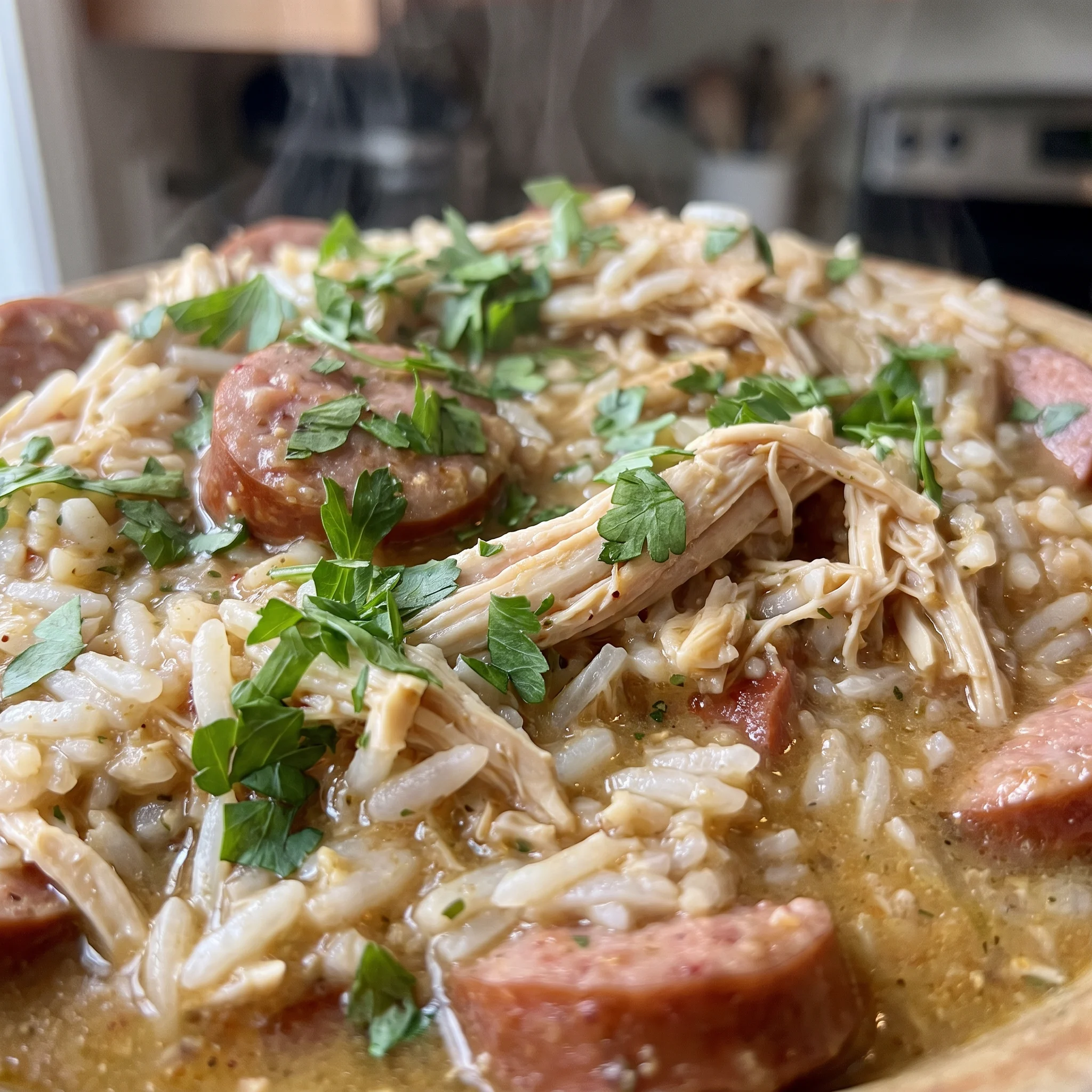
What to Buy and Prep for a Proper Bog
Bone-in chicken thighs without skin: The bone goes in the pan; skin would just render grease into oil you already measured.
Smoked sausage: Andouille or kielbasa, sliced into rounds so each piece browns and spreads its smoke through the rice.
Long-grain white rice: Long-grain, not short or medium; it thickens four cups of broth without collapsing into paste.
Ground turmeric: A small amount, but it’s what gives the pot that yellow Lowcountry glow and an earthy edge.
Cayenne pepper: Optional, and meant for background warmth, not a five-alarm burn; leave it out if you want.
Reading the Pot While It Cooks
When the rice has taken all the broth it can
After 30 to 35 minutes under the lid, tilt the pan and listen. A proper bog still moves when you shake it, loose enough that a spoon sinks without force. If the rice has gone stiff and dry at the edges, it cooked past the point where the grains can reabsorb liquid.
Add a splash of broth and stir it in off the heat. Grains should give a little resistance at the center, not crunch, not collapse.
The moment the shredded chicken goes back in
Shred the thighs while the rice finishes, then fold the meat in and cook another 5 minutes. That last stretch is where the pot tightens.
Stirring breaks some grains and thickens the liquid around the chicken, so the texture goes from wet rice to something closer to a loose porridge. Pull it off the heat while it still looks a little wetter than you want on the plate.
It sets as it sits.
Judging the sear before the liquid goes in
The chicken and sausage need real color, not just a turn from pink to pale. If the pieces look gray when you pull them out, the fond underneath will be thin and the finished pot will taste flat.
Give the sausage another minute or two until the edges curl and darken. The browned bits stuck to the pan are what the broth will lift and carry into the rice.
Tasting for salt before the parsley goes on
Both the sausage and the broth bring salt, and they stack. Wait until the chicken is back in and the rice is done, then taste a spoonful with a piece of sausage and a little rice together. If it tastes flat, add salt a pinch at a time.
If the sausage dominates, a squeeze of nothing helps; just know the pot is already seasoned and stop there.
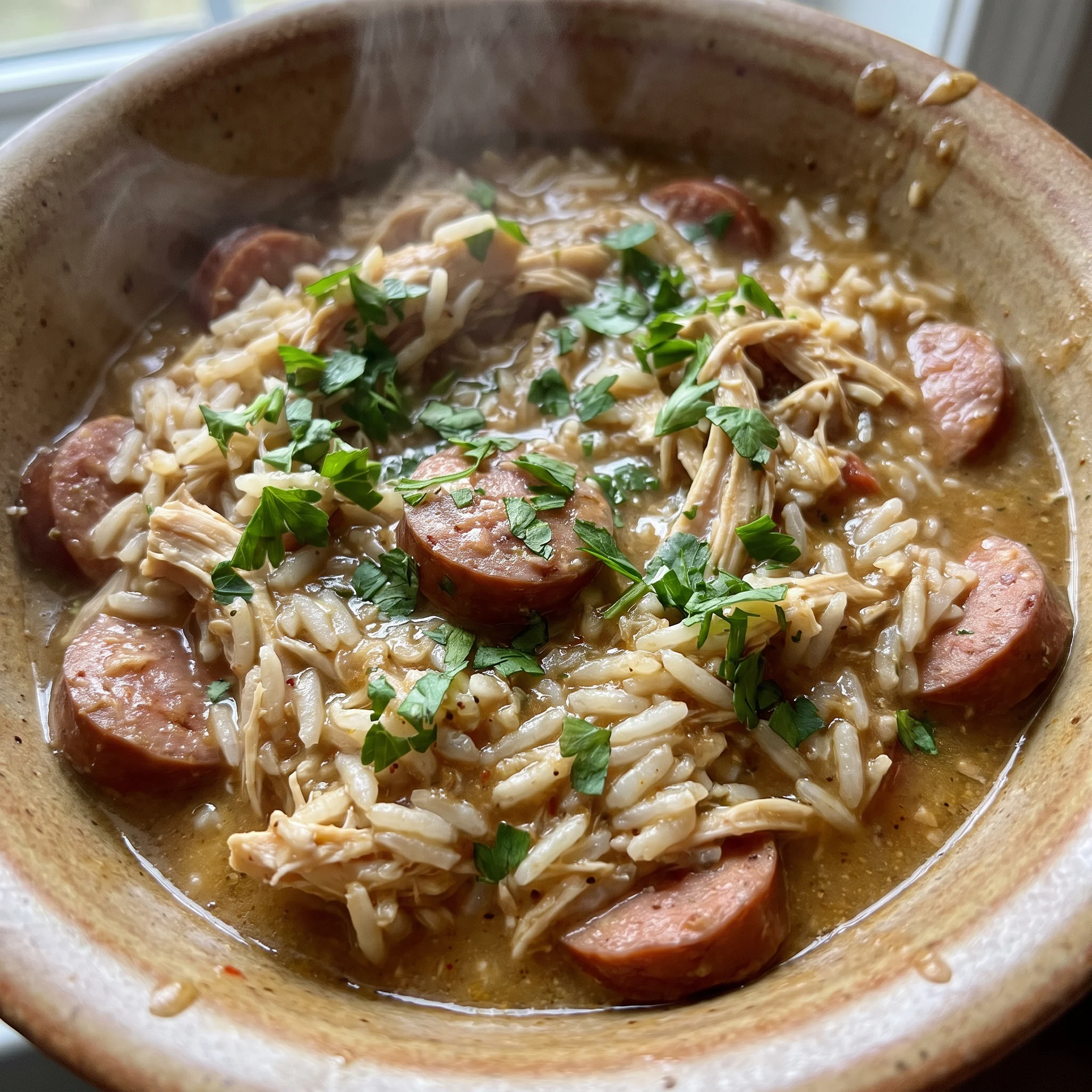
Southern Chicken Bog with Smoked Sausage
Ingredients
Method
- Warm olive oil in a large skillet set over medium-high heat. Place chicken thighs in and sear until they turn golden. Take out the chicken and set it aside. In the same pan, brown the sausage.
- Put in the diced onion and cook until softened. Add minced garlic and cook until it smells fragrant.
- Mix in the rice, paprika, turmeric, thyme, cayenne pepper, salt, and black pepper. Ensure the rice gets coated with the spices.
- Pour in chicken broth and put the chicken and sausage back into the pan. Let it come to a simmer, then cover and cook on low for 30-35 minutes.
- Take out the chicken, shred it, and put the meat back into the pan. Stir everything together and cook for another 5 minutes.
- Top with chopped parsley and serve hot.
The Swaps That Keep the Bog Loose, and the Ones That Don’t
Bone-in chicken thighs: Boneless, skinless thighs. The bone is what gives the broth body, so without it the pot tastes thinner and the rice won’t tighten the same way. Use boneless thighs if that’s what you have, but add an extra splash of broth (start with 1/4 cup) and cut the covered simmer to 20 to 25 minutes so the meat doesn’t overcook.
The chicken will still shred, but the finished dish loses some of that deep, slow-cooked flavor.
Andouille sausage: Kielbasa. Kielbasa is milder and less spicy, so the finished pot won’t have the same smoky heat.
It still browns and renders fat, and the rice will pick up its flavor, just softer. If you want some of that kick back, add an extra pinch of cayenne with the other spices. Andouille is the better choice if you can find it, but kielbasa works without wrecking the dish.
Long-grain white rice: Jasmine or basmati. Both are long-grain, so they’ll absorb the broth similarly, but jasmine is a bit softer and basmati is firmer and more separate. Either will give you a slightly different texture, but neither turns to paste.
Use the same 1 cup. If you try short-grain or Arborio, you’ll get a sticky, creamy pot that’s closer to risotto than chicken bog, so leave those for another night.
Chicken broth: Gluten-free chicken broth. Most broths are already gluten-free, but if you’re avoiding gluten, check the label.
The broth is the main liquid, so its flavor matters. A good gluten-free broth won’t change the texture at all. If you use a low-sodium version, you’ll likely need more salt at the end.
Taste before serving and adjust.
Tips
- Rinse the rice in a fine-mesh strainer under cold water for about 30 seconds only if the package says to, or if the grains look chalky with visible dust. That dust is loose surface starch, and with four cups of broth in a covered skillet it has nowhere to go but into the liquid, where it thickens the pot past spoonable before the 30 to 35 minutes are up. If the rice is labeled enriched or pre-rinsed, skip the rinse entirely and add it straight from the bag.
- If your market sells more than one long-grain white rice, choose the bag with the longest, most slender grains and the oldest-looking mill date you can find, not the cheapest. Fresh-crop rice holds more moisture and breaks down faster under a lid, so a bag that has sat a few months actually behaves better here: the grains stay distinct while the broth thickens around them. A softer, younger rice can leave the pot tight and pasty at the 30-minute mark even when you measured everything right.
Storage and Serving: Bringing Leftovers Back to Spoonable
Chicken bog is at its best the moment it comes off the heat, still loose enough that a spoon sinks without pushing. Serve it within 30 minutes of that final 5-minute stir. Past an hour on the counter, the rice keeps drinking, and the pot tightens into something closer to a stiff rice cake.
The parsley goes on at the table, right before the first serving, so it stays green instead of wilting into the steam. Refrigerate leftovers in a shallow container within two hours. Cold, the bog sets firm, because the rice has absorbed the last of the free liquid.
It keeps three to four days. Reheat a portion in a saucepan over low heat with a splash of chicken broth, a tablespoon at a time, stirring until it loosens. The microwave works, but it heats unevenly and can leave the rice dry at the edges.
If you froze a portion, thaw it overnight in the fridge, then reheat the same way. Freezing works, but the texture comes back softer, so save it for a weeknight rather than company.

Frequently Asked Questions
Can I make chicken bog ahead of time and reheat it?
Yes, and it reheats well as long as you add liquid back. Cold, the rice has absorbed everything free in the pot, so it sets firm and looks like a solid block in the container.
Reheat a portion in a saucepan over low heat with a splash of chicken broth, a tablespoon at a time, stirring until it loosens. The microwave works but heats unevenly and dries the edges, so use the stovetop if you have a choice. If you froze a portion, thaw it overnight in the fridge first, then reheat the same way.
Why did my chicken bog turn out mushy?
In almost every case, the rice was not long-grain. Short or medium grains release starch fast and collapse into a sticky, creamy pot that reads as mushy no matter how long you cooked it.
Check your bag: long-grain is what thickens four cups of broth without turning to paste. The second thing to look at is how long the pot sat after the final stir. That last five minutes brings the grains together on purpose, but the rice keeps drinking liquid the whole time it’s off the heat, so a bog left on the counter past an hour tightens and softens past the texture you want.
How is chicken bog different from chicken pilau?
Texture is the line between them. Pilau is drier, the grains separate and fluffy, and it mounds on a plate. A bog is wetter, loose enough that a spoon sinks without force, almost porridge in the bowl.
The two share the same Lowcountry roots and many of the same ingredients, so the difference is really in how much liquid the rice is allowed to keep. If you want to see the contrast, cook your bog as written and then taste it beside a pilau recipe, and the wetness will tell you which one you’re eating.
What should I serve with chicken bog?
Something with acid and crunch, because the pot is rich and smoky already. A vinegar-based slaw, sliced tomatoes with salt, or a pile of quick-pickled onions all cut through the sausage and rice. Greens cooked with a little bacon work too, especially if you want the meal to feel like a Lowcountry plate.
Skip anything heavy or creamy, since the bog is already soft and full-bodied. Parsley goes on at the table, right before the first serving, so it stays green.
