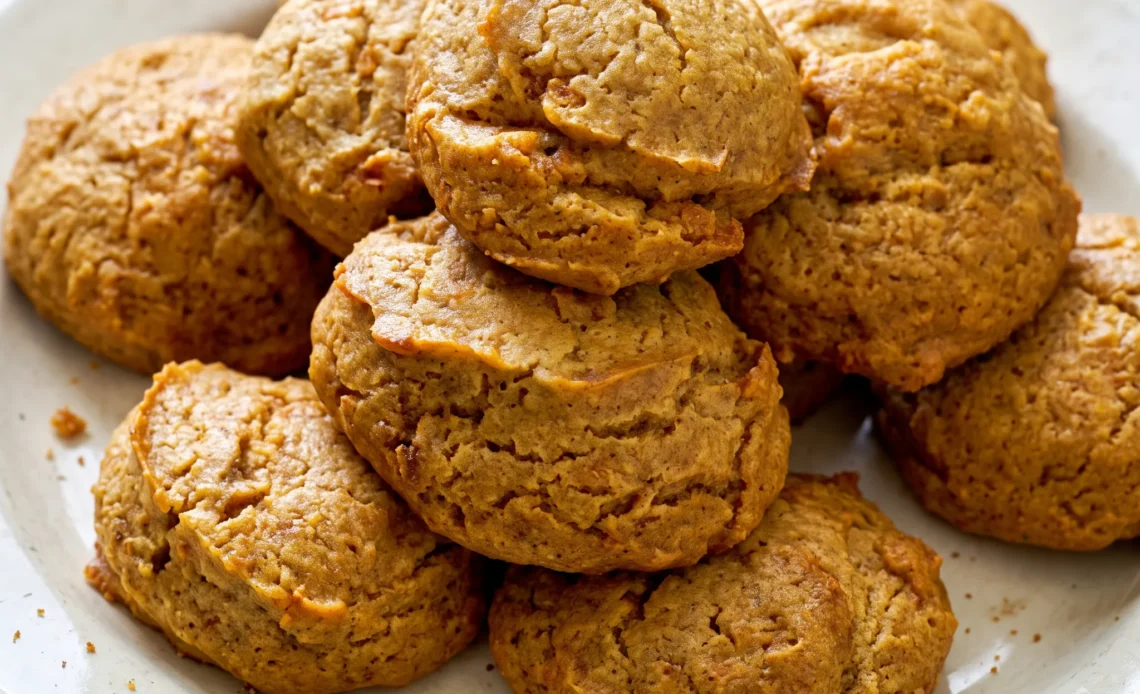
A persimmon that’s ready for this recipe feels like a water balloon, and that’s the whole reason a bowl of them works here. Hachiya, never Fuyu, softened past the point you’d want to eat it out of hand.
The puree carries so much water that the dough never behaves like a drop cookie you can roll. It scoops loose and glossy, spreads as it bakes, and sets into something soft and cake-like that stays tender for days. The spices have to work harder than usual because the fruit itself is mild: cinnamon out front, clove and nutmeg behind it, enough to keep a faintly drying sweetness from reading flat.
These persimmon cookies reward ripeness over technique, and the ripeness is the one thing you can’t fake. A firm persimmon gives you a thin, tannic cookie that no amount of spice rescues.
The persimmon puree makes this dough unusually wet, so it is tempting to keep stirring until the flour disappears completely and the batter looks smooth. But every extra stroke hydrates the flour and aligns gluten strands, and a wet dough gives those strands more mobility than a stiff one does. The result is a dough that turns elastic and bakes into a tough, rubbery cookie instead of the soft, cake-like crumb the fruit puree is supposed to create.
Why Is This Persimmon Dough So Sticky?
Persimmon puree brings a lot of water to the bowl. That single fact changes how this dough behaves from the moment you start mixing. You’ll notice it feels looser than typical drop cookie dough, more like a thick batter that holds a scoop shape but won’t hold a hand-rolled ball.
That’s why the recipe calls for a full teaspoon of baking soda instead of the half-teaspoon you might expect. There’s enough acidity in the fruit to need that extra lift, and the soda also helps the cookies brown and set without turning tough.
Portioning with a scoop or two spoons isn’t a suggestion, it’s the only way to get even mounds. The dough won’t firm up in the fridge either, so don’t wait for it to. Expect a soft, sticky scoop that drops onto the sheet with a slight spread as it bakes.
What Do the Spices Do for Persimmon Cookies?
Cinnamon, cloves, and nutmeg are here to do more than smell like a holiday kitchen. Persimmon puree has a mild, honeyed sweetness that can taste flat or faintly drying on its own. The spices cover that gap.
Cloves and nutmeg are potent, so a half-teaspoon each is deliberate: enough to round out the fruit without turning medicinal. Cinnamon leads the warm note, the one you notice first when you bite in.
Together they make the cookie taste like something deliberate rather than just sweet. Skip them and the persimmon flavor can read as thin or slightly tannic, especially if your fruit was less than ripe.
What you’re after is a cookie that tastes spiced and fruity at the same time, with neither one shouting over the other. The aroma as they bake should tell you the balance is close.
Are Chocolate Chips and Pecans Necessary?
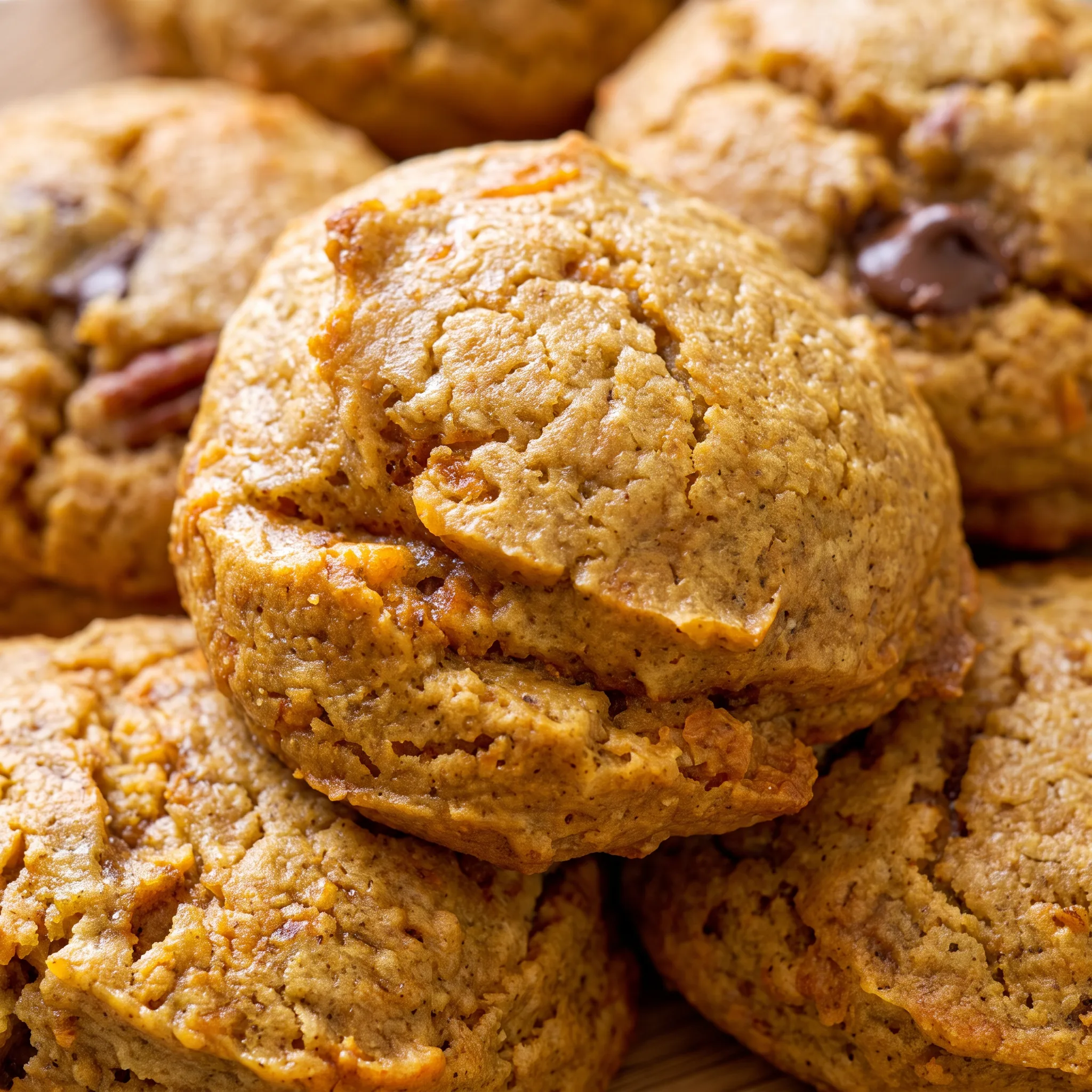
Optional doesn’t mean pointless. Chocolate chips and pecans add bulk and texture to a dough that’s already soft and wet. Fold in a cup and a half of mix-ins total and you get 20 cookies from roughly two-tablespoon scoops.
Skip them and you still get 20, just smaller and with less to chew on. Pecans bring a crunch that keeps the soft, cake-like crumb from feeling one-note. Chocolate chips melt into gooey pockets that play off the persimmon’s honeyed flavor.
Neither is required for the cookie to work, but they make it more interesting to eat. The dough will feel thicker once they’re in, and that’s a good sign.
If you use both, you’ll notice the cookies hold their shape a little better on the sheet because there’s less pure dough to spread. What you end up with is a cookie that has contrast in every bite.
What Texture Should Persimmon Cookies Have?
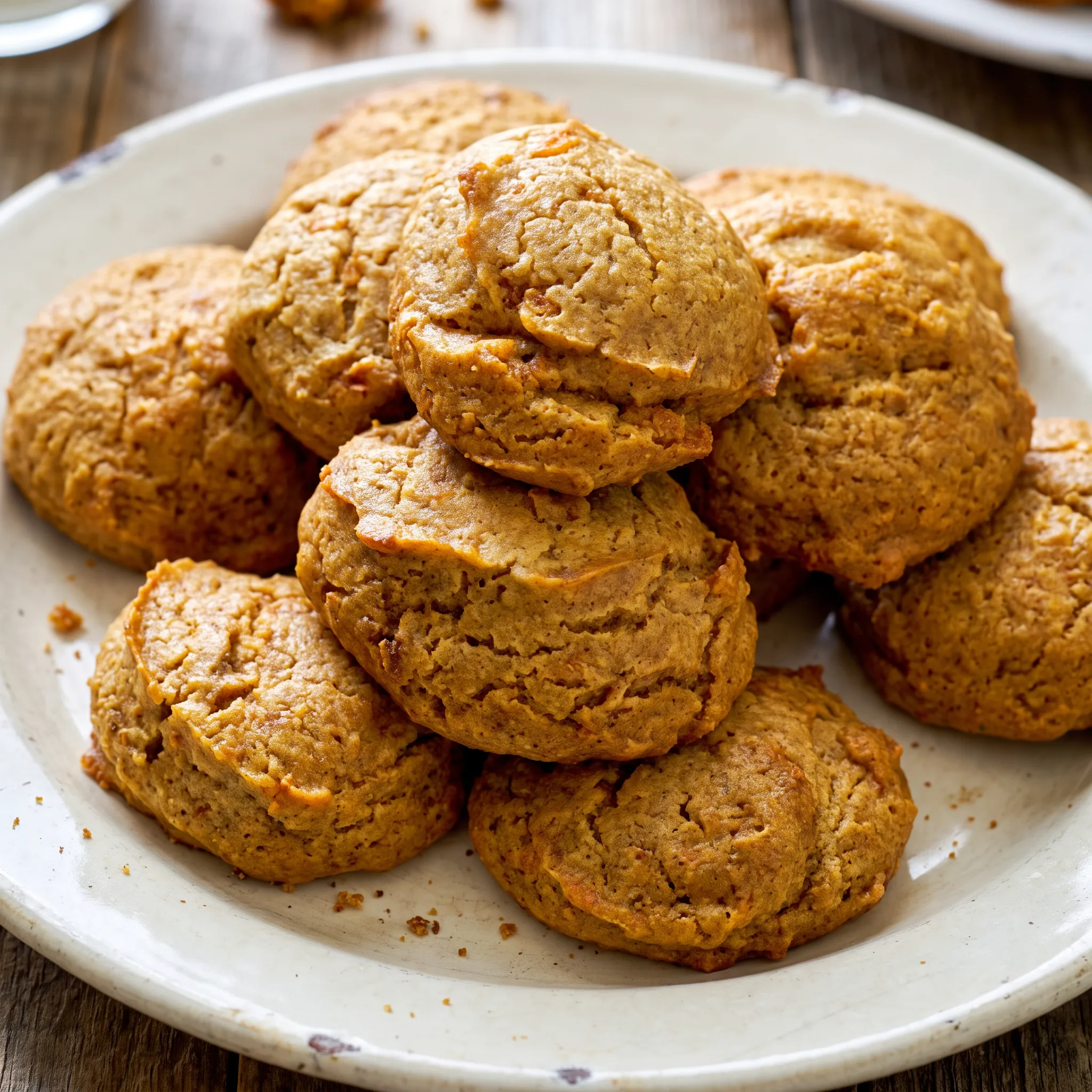
These are soft, cake-like cookies, not crisp or chewy ones. The persimmon puree keeps them moist for days, so a batch made on a Monday still tastes fresh on Thursday.
Inside, the crumb is tender and slightly spongy, the kind that gives a little when you press it. That texture comes from the fruit and the modest amount of flour relative to liquid.
Even if you leave them in the oven a few minutes too long, they’ll still be softer than a standard sugar cookie, though the edges will firm up and the center will dry out. What you want is a cookie that bends slightly before it breaks.
A crisp snap means they’ve gone past the point. Bite into one while it’s still a little warm and you’ll feel the difference: the outside barely resists, and the middle stays tender.
What to Look For in the Persimmon and Its Partners
Persimmon puree: It needs to be very ripe and mushy, so choose Hachiya over Fuyu and let it soften until it feels like a water balloon.
Butter: Room temperature matters because cold butter won’t cream smoothly with the sugar, leaving flecks that never blend into the wet mixture.
Egg: A room temperature egg incorporates more evenly than a cold one, which can shock the butter and make the batter look curdled.
Nutmeg: Freshly grated nutmeg has a sharper, warmer bite than pre-ground, and the 1/2 teaspoon here is potent enough to notice the difference.
Pecans: Toasted pecans bring out a deeper nuttiness that raw ones lack, and they hold their crunch better against the soft, moist crumb.
How to Tell When Persimmon Cookies Are Ready to Come Out
Reading the dough after the egg and puree go in
Once the egg and persimmon puree hit the creamed butter and sugar, the mixture can look broken or curdled. That’s normal.
The water in the fruit is enough to make the fat separate into flecks. Keep beating, and it comes back together into a loose, glossy slurry.
If it stays slick and separated after a minute, the butter was too warm or the puree too cold. Let everything sit for five minutes and beat again.
Scrape the bowl before the dry ingredients go in, or you’ll leave a streak of uncreamed butter at the bottom.
Judging the dough by how it leaves the spoon
This dough is wetter than a standard drop cookie, and that’s not a flaw to fix with more flour. Scoop a mound and watch it.
It should hold its shape just long enough to land on the sheet, then settle with a slight spread. If it runs off the spoon like batter, the persimmon was especially watery and the cookies will bake flat.
If it stands up stiff and dry, you’ve added too much flour and the cookies will be tough. The feel is the test, not the look.
Knowing when the edges have set but the centers haven’t
At 13 minutes, check the bottoms. You’re looking for the bottom edges to turn golden, not the tops to brown.
The centers will still look underdone, slightly glossy and soft to the touch. That’s where they need to be.
Pull them at 13 to 15 minutes for a softer cookie, or push to 18 if you want a firmer edge. Past 18 minutes, the bottoms scorch and the crumb turns dry and crumbly. The residual heat on the sheet finishes the centers as they cool.
Telling when the spice level is right before baking
The raw dough is your only chance to taste the spice balance. Pinch off a small piece and taste it.
Cloves and nutmeg are potent, and a half-teaspoon of each can overwhelm a mild persimmon. What you want is a warm note that hits first, then fades into the fruit’s honeyed sweetness.
If the clove burns at the back of your throat, the batch will taste medicinal. You can’t remove spice, but you can add a tablespoon more sugar or a tablespoon more puree to dilute it slightly.
Persimmon Cookies with Chocolate Chips and Pecans
Ingredients
Method
- Set oven to 350°F (175°C).
- Beat 3/4 cup (150 g) sugar with 1/2 cup (113 g) butter or shortening until a smooth, creamy blend forms.
- Incorporate 1 egg and the pureed persimmon into the creamed butter and sugar. Before mixing in the dry ingredients, scrape down the bowl’s sides.
- Combine 1 1/2 cups (200 g) all-purpose flour, 1/2 tsp salt, 1 tsp baking soda, 1/2 tsp cinnamon, 1/2 tsp cloves, and 1/2 tsp freshly grated nutmeg into the mixture.
- If you’re including the optional mix-ins, fold in 3/4 cup (128 g) chocolate chips and 3/4 cup (85 g) pecans (or a different nut).
- Stir gently but completely until a cohesive dough forms.
- Scoop equal portions of dough, about 2+ tablespoons each, onto a lightly greased cookie sheet or silicone baking mat, spacing only 6-8 cookies per half baking sheet. This yields 20 persimmon cookies.
- Bake 13-18 minutes, until the bottom edges start to turn golden. Let cool briefly, then serve.
What You Can Swap in Persimmon Cookies and What You Really Can’t
Butter: Margarine or shortening, same 1/2 cup (113 g). Shortening makes the cookies softer and a touch taller, but they lose the buttery flavor and the edges won’t brown as deeply. Margarine works, though some brands carry more water, which can make the dough looser and the cookies spread a little more.
Either way, cream it with the sugar just as you would butter.
All-purpose flour: None worth making. This dough is already wet and loose.
Swapping in whole wheat, almond, or oat flour changes how much liquid the dough absorbs and how it sets, and you’ll end up with a flat, gummy, or crumbly cookie. Stick with all-purpose here.
Chocolate chips: Leave them out, or use an equal amount of chopped chocolate or dried fruit. Chocolate chips are fully optional.
Omit them and the cookies are smaller but still good. Chopped chocolate melts into streaks rather than holding a shape. Dried fruit, like chopped dates, adds chew but also sweetness, so you may want to cut the sugar slightly.
Start with the same 3/4 cup (128 g) the recipe calls for and adjust after one batch.
Pecans: Any other nut, or leave them out. Pecans are optional.
Walnuts or almonds work, but toast them first if you want the same depth. Skip nuts entirely and the cookies lose their crunch; the texture becomes uniformly soft. Use the same 3/4 cup (85 g) and adjust to your taste.
Storage and Serving: Keeping Persimmon Cookies Soft
Eat these cookies within a few hours of cooling for the best contrast: a barely set edge and a tender, faint center. After that they settle into their true texture, which is soft and cake-like all the way through. Once fully cool, store them in an airtight container at room temperature.
They keep for days that way because the persimmon puree holds so much water and the crumb stays moist. Day one they’re tender. By day three they’re noticeably wetter and almost cake-like, which some cooks prefer.
Keep them at room temperature rather than the fridge; cold air dries out a soft cookie like this and firms the crumb. If they do dry out, a slice of bread in the container for a day brings back some softness. For longer storage, freeze the baked cookies in a single layer, then bag them.
Thaw at room temperature in the container so they reabsorb moisture. Serve them plain or with coffee, no finishing touch needed. The optional chocolate and pecans are folded into the dough, so nothing goes on at the end.
Tips
- Puree the persimmon through a fine-mesh sieve or give it a quick pass with an immersion blender before it goes into the bowl. Ripe Hachiya flesh holds long fibers that survive a fork-mashing, and those fibers stay visible as pale threads in the baked crumb and leave pockets of unsweetened fruit that never blend into the batter. A smooth puree also measures more honestly, so 1 cup (240 g) is actual fruit rather than fruit plus trapped air.

Frequently Asked Questions
Can I make persimmon cookie dough ahead of time and bake later?
You can, but the dough won’t firm up in the fridge, so don’t expect it to handle like chilled sugar cookie dough. The puree brings so much water that cold air just makes it stiffer and glossier, not scoopable in a different way.
If you do hold it, press plastic wrap against the surface so a skin doesn’t form, and let it sit out until it loosens enough to scoop. The baked cookies are the better make-ahead move: freeze them in a single layer, then bag them and thaw at room temperature in the container.
Why did my persimmon cookies turn out cakey instead of like cookies?
Cakey is the expected texture here, not a mistake. The cup of puree and the modest amount of flour mean the crumb sets tender and spongy, closer to a soft muffin top than a crisp cookie. If yours came out denser and heavier than that, the likely culprit is overmixing once the flour went in, which develops gluten and turns the crumb tough.
A secondary check: if the dough looked wet and you kept adding flour, you pushed it toward dry and bready. Next time, stop mixing when the last dry streak disappears and scoop right away.
How do I know when persimmon cookies are done baking?
Look at the bottom edges, not the tops. At 13 minutes, slide a spatula under one and check for a golden ring where the cookie meets the sheet. The centers will still look glossy and feel soft, and that’s where you want them.
Pull them between 13 and 15 minutes for a softer bite, or let them go to 18 if you prefer a firmer edge. Past 18, the bottoms scorch and the crumb dries out.
What does persimmon cookie taste like?
The first thing you notice is the spice: cinnamon leads, with clove and nutmeg close behind. Underneath that is a mild, honeyed sweetness from the persimmon, not sharp or tropical, more like a ripe pear crossed with brown sugar.
The texture is soft and moist, so the flavor lingers a little rather than snapping clean like a crisp cookie. If you added chocolate chips, they melt into pockets that push the whole thing toward a spiced chocolate note; pecans add a toasted crunch that cuts the sweetness.
How should I store persimmon cookies so they don’t get soggy?
Once they’re fully cool, keep them in an airtight container at room temperature, not the fridge. The puree holds a lot of water, so they stay moist for days; by day three they’ll be noticeably wetter and more cake-like, which some people like. Cold air dries out a soft cookie like this and firms the crumb, so skip the refrigerator.
If they do dry out, a slice of bread in the container for a day brings back some softness.
