
Most people toss the fruit, drizzle the honey, and walk away, and that is where this cinnamon apple grape salad goes soft. The assembly takes 15 minutes and the stove only sees a dry skillet for the nuts, so the salad feels like a free win on a weeknight, which is exactly when the timing catches you. Honey and salt start pulling water out of the cut apples and grapes the second they land, and the pecans soak up what the fruit gives off.
The window between crisp and chewy is shorter than the prep time. Coat the apples with lemon the moment they’re cubed, not after you finish slicing grapes, because the edges tan while you work. Toasted nuts cooled completely before chopping, not warm and steaming in the pile.
None of this is hard. It just has an order that rewards attention and punishes delay.
The Lemon Juice Shield
Cut an apple and within minutes the exposed flesh starts turning tan, then brown. That color is the fruit’s own response to air, and it happens fast enough to notice while you’re still slicing the grapes.
Lemon juice interrupts it. The acid lowers the surface pH, which slows the browning reaction enough to buy you hours instead of minutes. You don’t need to soak the cubes or measure precisely, just toss them in the bowl with the lemon juice right after cutting.
Every surface that gets coated stays closer to its original pale cream. Skip it and the salad still tastes fine, but the bowl looks tired before it hits the table. The point is simple: coat early, and the apples hold their color through the meal.
Why Nuts Need Heat
Raw pecans taste waxy and flat, almost like a blank crunch. Heat changes that. Toss them in a dry skillet and within a few minutes they smell like roasted nuts, deep and warm, and the color shifts from pale to light brown.
That browning is where the flavor comes from, and the oils rise to the surface so each bite tastes richer. Pull them off the heat and let them cool completely before chopping. Chop them warm and they steam inside the pile, turning soft and losing the snap you want.
Once cool, break them into irregular pieces, some big enough to notice, some small enough to cling to the fruit. The contrast between soft apple, juicy grape, and crisp nut is what keeps this salad from feeling like a bowl of sweet mush.
Dressing That Sticks
Honey is thick, and that thickness is the whole reason this dressing works. It clings to the cut faces of the apples and the slippery skins of the grapes instead of sliding to the bottom of the bowl. Cinnamon doesn’t dissolve in honey, so it stays as tiny particles that ride along on the surface, dusting every piece.
A pinch of sea salt does more than you’d think: it cuts the sweetness and makes the cinnamon taste more like itself. Whisk the honey, cinnamon, and salt together until you see no dry streaks or clumps.
If you drizzle it half-mixed, you’ll hit a pocket of plain cinnamon that tastes raw and powdery. The dressing should look uniform, a smooth amber that ribbons off the whisk. When it coats the fruit evenly, every bite carries the same warmth.
The Clock Starts Now
The moment the dressing and salt touch the fruit, water starts moving out of the apples and grapes. Salt and honey pull moisture to the surface, which thins the dressing and softens the fruit.
The pecans, scattered through the bowl, soak up that released liquid and lose their crunch. This isn’t a slow process you can ignore; within an hour the texture changes noticeably. The salad is at its crispest right after tossing, when the apples still snap and the nuts still shatter.
If you’re serving within the hour, you’re fine. Beyond that, the fruit gets softer and the nuts get chewier, which some people don’t mind.
I’ve found that if I want that initial crunch, I toss and serve without waiting. For a colder version, chill it briefly but know the texture will be different. Taste a spoonful and decide.
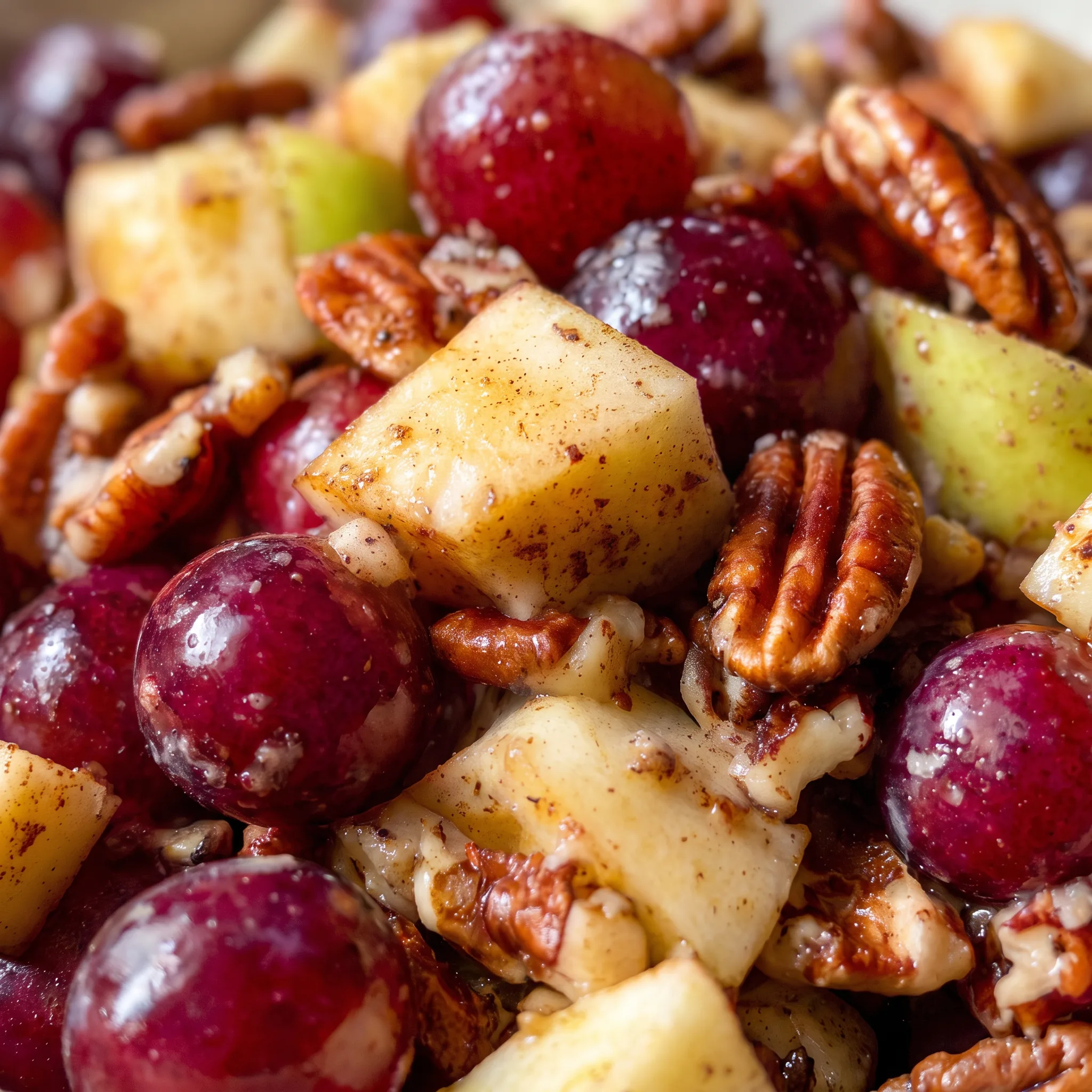
Pick the Right Apple and Grape for This Bowl
Apples: Choose a crisp, tart-sweet variety like Honeycrisp or Pink Lady that holds its shape and won’t turn grainy in the dressing.
Red grapes: Pick plump, firm grapes with no soft spots, as they’ll stay juicy and won’t collapse when sliced and tossed.
Pecans or walnuts: Buy fresh nuts, not rancid ones, and toast them just until they smell nutty and turn light brown.
Honey: Use a runny honey like clover or wildflower, not a thick crystallized one that won’t blend smoothly with cinnamon.
Judgments That Keep This Salad Crisp and Bright
When the nuts are toasted enough
The window between raw and burnt is narrow when you toast nuts in a dry skillet. Start smelling for a deep, warm nut aroma and watch for the color to shift to light brown.
If you see dark spots or smell acrid, they’re past saving; start over. Pull them off the heat at the first sign of browning because they keep cooking in the hot pan. Let them cool completely before chopping, or they’ll steam and lose their snap.
How to coat the apples without soaking them
As soon as you cut an apple, its surface starts browning. Tossing the cubes with lemon juice right in the bowl coats them and slows that. You don’t need to measure; just drizzle and toss until every piece glistens.
If you wait even a few minutes, the edges will already be tan. The lemon juice also adds a tang that balances the sweet dressing, so don’t skip it.
Getting the dressing smooth, not streaky
Honey and cinnamon don’t blend easily; cinnamon tends to clump and float. Whisk until you see no dry pockets and the mixture looks uniform, a smooth amber. If the honey is too thick, warm it just until it drizzles; 10 to 15 seconds in the microwave is enough.
Overheating can make it thin and runny, so check after 10 seconds. A pinch of salt enhances the cinnamon and cuts sweetness, but mix it in fully or you’ll hit a salty spot.
The point when the salad starts to soften
Once the dressing hits the fruit, the clock is ticking. The salt and honey draw water out of the apples and grapes, which thins the dressing and softens the nuts. Within an hour, the texture changes noticeably: apples lose their snap, nuts get chewy.
If you want peak crunch, toss and serve immediately. For a colder salad, chill it, but know the texture will be softer. Taste a spoonful and decide if that trade-off works for you.
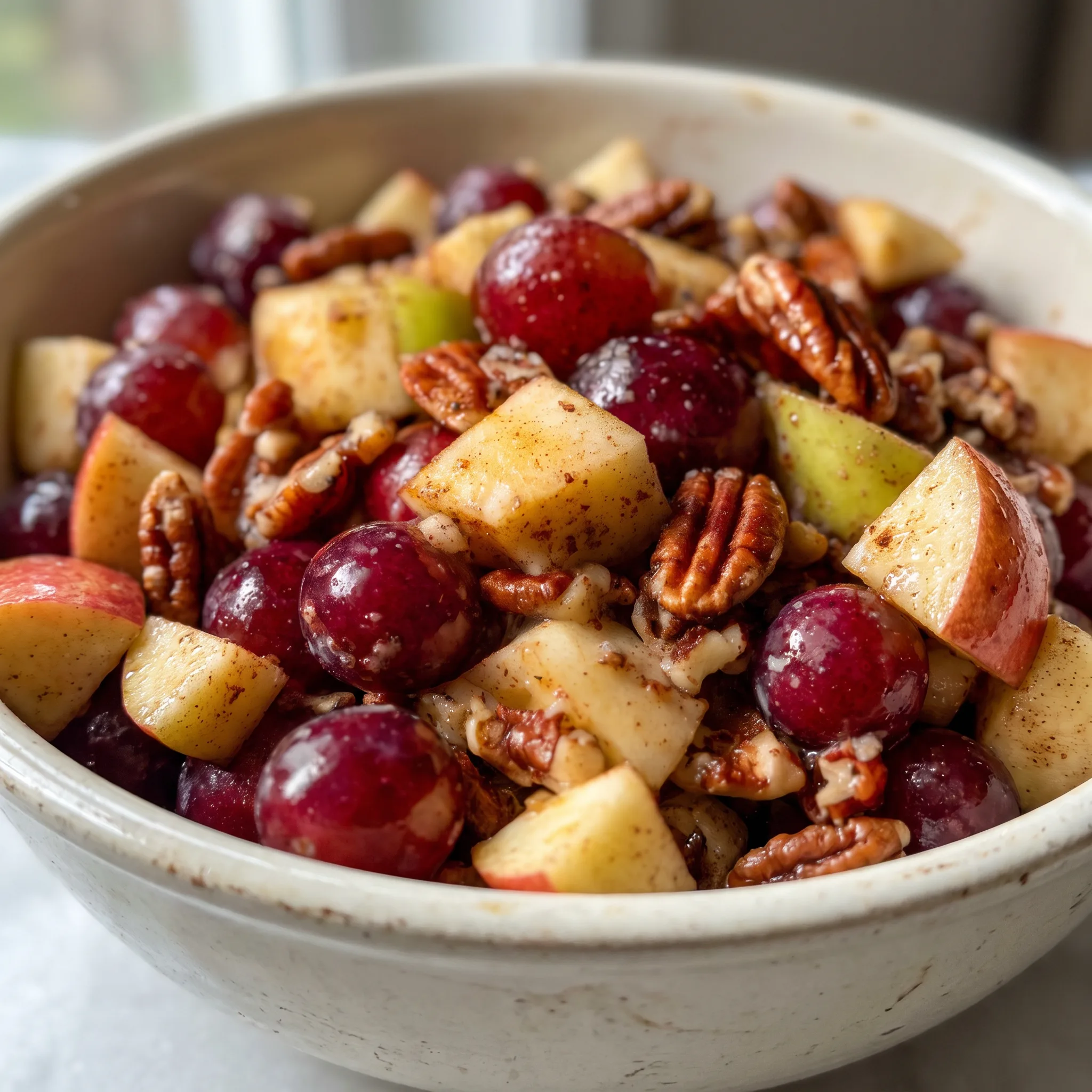
Cinnamon Apple Grape Salad with Pecans
Ingredients
Method
- In a dry skillet set over medium heat, toast the pecans or walnuts for 3–5 minutes, stirring often, until they smell nutty and take on a light brown color. Take off the heat, allow to cool, then chop roughly into bite-sized pieces.
- Rinse and cube the apples into bite-sized pieces, keeping the peel on for added nutrients and visual appeal. Slice the grapes in half lengthwise. Combine both fruits in a large mixing bowl and toss with lemon juice to keep them from browning.
- In a small bowl, whisk the honey, ground cinnamon, and a pinch of sea salt until thoroughly blended. If the honey is too thick, warm it in the microwave for 10–15 seconds to make it easier to drizzle.
- Drizzle the cinnamon-honey dressing over the fruit mixture and add the toasted, chopped nuts. Toss gently until the fruit is evenly coated with the dressing and the nuts are scattered throughout.
- Serve right away for the crispest texture, or chill in the refrigerator for up to 2 hours before serving if you prefer it cold. For presentation, top with an extra sprinkle of cinnamon and a few whole pecans if desired.
What You Can Swap Without Ruining the Bowl
Pecans or walnuts: For a nut allergy, leave them out and add an equal amount of toasted sunflower seeds or pepitas. If you just prefer one nut, use all pecans or all walnuts. Sunflower seeds and pepitas toast faster than pecans or walnuts, so watch them closely; they go from raw to burnt in under a minute.
They also lack the same buttery richness, so the salad tastes a bit leaner. Using all pecans gives a softer crunch and a sweeter finish, while all walnuts bring a slight bitterness that cuts the honey. Either nut still needs to be cooled completely before chopping, or it steams and loses its snap.
Honey: Maple syrup or agave nectar, measured tablespoon for tablespoon. Start with the same 3 tablespoons the recipe uses, then taste after tossing and add more if the fruit needs it. Maple syrup is thinner than honey, so the dressing won’t cling as tightly to the apples and grapes.
You’ll likely get a little more pooling at the bottom of the bowl. Agave is also thinner and tastes more neutral, so the cinnamon comes through a bit sharper. Neither will thicken the way honey does, but both still carry the cinnamon and salt.
If you use maple, expect a faint woody note that some people like and others don’t.
Apples: Diced pears, same amount: 3 medium pears, cut into cubes. Use firm varieties like Bosc or Anjou. Pears are softer and juicier than apples, so they release more water once the dressing hits.
The salad will get soggy faster, often within 30 minutes instead of an hour. The flavor is sweeter and more floral, which makes the lemon juice and cinnamon taste a little different. If you’re serving right away, pears work fine, but don’t plan on leftovers holding up.
Red grapes: Green grapes, sliced the same way. Or omit the grapes and use an extra cup of diced apples or pears.
Green grapes are tarter and crunchier than red, so the salad gets a sharper edge that balances the honey. They also hold their shape a bit longer. If you leave grapes out entirely, you lose the juicy pops that contrast with the soft apple and crunchy nuts.
The dressing will seem sweeter without that tartness, so you might want to add a squeeze more lemon juice before tossing.
Storage and Serving: Treat It as a Same-Day Bowl
Serve this within an hour of tossing for the best texture. The apples still snap, the grapes stay taut, and the pecans crack instead of bend. If you want it cold, the refrigerator buys you up to 2 hours, and that is the ceiling, not a target.
Past two hours the salt and honey have pulled enough water from the cut fruit that the dressing turns thin and the nuts go soft. Keep leftovers in a sealed container in the fridge and eat them within a day, knowing day two is a softer, wetter salad. Don’t freeze the assembled bowl; the fruit collapses on thaw and the nuts turn limp.
Freeze only the toasted chopped nuts, up to a month, and rewarm them in a dry skillet to bring back the snap. Add the final cinnamon dusting and whole pecans right before the bowl goes to the table, never earlier, or they sink and blur.
Tips
- Press the cut face of each apple cube with your thumb before it goes in the bowl. A Honeycrisp or Pink Lady at peak ripeness resists the press and springs back; one that dents and stays dented will slump under 3 tablespoons of honey within 20 minutes, no matter how much lemon juice you used. For grapes, slice one in half and squeeze it: a snappy grape sprays juice and holds its half-moon shape, while a soft one flattens into a limp crescent that disappears into the dressing.
Once the dressing and salt contact the cut fruit, water begins moving out of the apple and grape cells into the bowl. You can read the change by watching the dressing: when it starts to look watery at the bottom instead of clinging to the fruit, the fruit has already begun to soften and the nuts are absorbing moisture. At that point, the salad will not return to its peak crispness.

Frequently Asked Questions
Can I make this apple grape salad ahead of time?
Not really, and the recipe’s own storage note is blunt about it: serve within an hour of tossing for the best texture. If you want it cold, the fridge buys you up to 2 hours, and that’s the ceiling, not a target. What you can do ahead is the prep that doesn’t touch the fruit: toast and cool the nuts, whisk the honey, cinnamon, and salt into a smooth amber, and hold both separately.
Combine everything at the last minute you can stand. Leftovers keep in a sealed container for a day, but day two is a softer, wetter salad, so plan portions rather than a big batch.
Why did my apple grape salad get watery?
Salt and honey pull water out of the cut apples and grapes, and that liquid lands in the bowl, thinning the dressing. The longer it sits, the more pools at the bottom, so the timing is the first thing to check. A second cause is the fruit itself: apples that sat around a while, or pears swapped in, release more water than firm, fresh ones.
Don’t try to drain and re-dress it, the damage is already in the texture of the nuts. Toss closer to serving and the bowl stays tight.
How is this different from a classic Waldorf salad?
Waldorf leans on mayonnaise, celery, and often raisins, and it’s built to sit in the fridge without falling apart. This one skips the mayo entirely. The dressing is honey, cinnamon, and a pinch of salt, so it’s a thin, sweet glaze rather than a creamy binder, and it clings to the cut faces of the apples and grape halves instead of coating everything in a blanket.
Grapes replace the celery’s crunch, and toasted pecans or walnuts carry the texture. The result reads brighter and more like a fruit bowl than a deli salad, which is also why it doesn’t hold the way a Waldorf does.
Do I have to serve this salad cold?
No. Right after tossing is when the apples still snap and the pecans crack, and that’s the version worth eating. Chilling is optional, and if you do it, the refrigerator buys you up to 2 hours, not more.
Cold mutes the cinnamon a little and firms the honey, so the dressing feels tackier on the fruit. Either way, hold the final cinnamon dusting and whole pecans until the bowl goes to the table, or they sink and blur.
