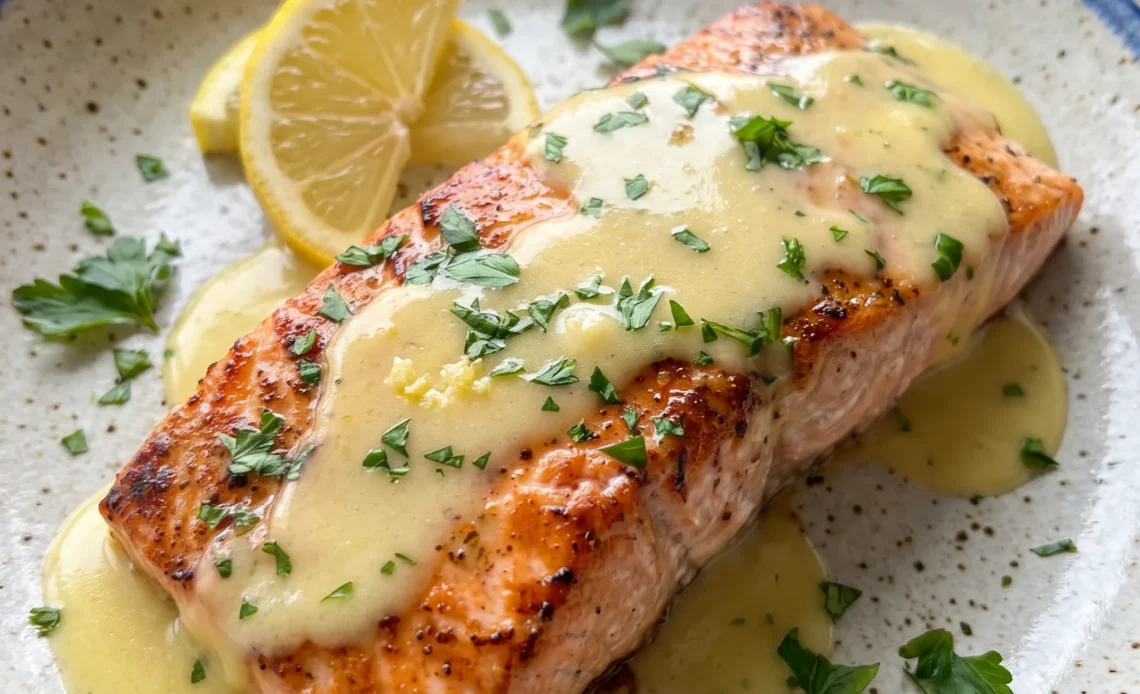
Most people pull salmon at the first sign of flaking and end up with a dry fillet under a sauce that can’t save it. The bake itself is forgiving on paper, but the window between translucent and chalky is narrow, and it closes while you’re stirring cream on the stove. What makes baked salmon with butter lemon sauce work is timing the two against each other: the sauce needs a few minutes of reduction, the fish needs a short rest, and neither waits politely.
Get the sauce too thin and it slicks the plate instead of clinging; pull the fish too early and it fights the lemon. The sauce is rich enough to forgive a lot, but it can’t undo an overcooked fillet.
Farmed versus Wild
Salmon behind the glass at the counter splits into two kinds, and the one you pick changes how this whole plate eats. Wild-caught, the Sockeye, Coho, King types, runs lean and firm, with a tighter grain that holds up under a ladle of cream sauce.
Farmed fillets carry more fat, which sounds like a bonus until they hit a hot pan: that fat renders and pools, and if your sauce is already loose, it’ll thin out further against the fish. Neither is wrong, but farmed reads richer and heavier, wild reads cleaner and brighter with the lemon.
Look for flesh that’s bright and firm, no dull patches, no sour or fishy smell at the counter. Frozen is fine if you thaw it completely, all the way through, before it goes anywhere near the sheet pan.
A cold center cooks at its own pace and weeps water onto the pan, and that water ends up in your sauce.
Drying and Seasoning
A salmon fillet straight from the package wears a slick of moisture, and that moisture is the enemy of everything you’re about to build. Press it dry with paper towels, all sides, until the paper comes away mostly clean. Now salt and pepper actually land on the fish instead of dissolving into a puddle, and any spice blend you’re using clings where you put it.
Go heavier than feels polite; salmon is a thick, rich piece of protein and it can take a real crust of seasoning. Once it’s coated, walk away for five to ten minutes. The salt pulls a little liquid to the surface and then draws it back in, carrying the flavor with it, and the surface dries slightly, which means the fish browns instead of steaming.
Skip the dry-down and the fillet sits in its own liquid in the oven, and that liquid runs off onto the pan and into the sauce, where it does nothing good.
Building the Sauce
The sauce comes together in one pan, but the order matters more than the ingredients. Melt six tablespoons of butter over medium-low, then add the garlic, shallot, and thyme sprigs.
You’re not browning anything here, just sweating the aromatics until the shallot goes translucent and the kitchen smells like the start of something. Three to five minutes does it.
Pour in the broth and cream, bring it to a gentle simmer, and let it reduce until it coats the back of a spoon with a thin film. That thickness is your signal that the sauce will cling to the fish instead of running off.
Fish out the thyme, squeeze in the lemon, and fold in the parsley or basil. Taste it: you want tang cutting through the cream. If it’s tighter than you like, the two reserved tablespoons of butter, whisked in off the heat, loosen it without dulling the lemon.
Into the Oven at 380
Line a sheet pan with parchment and set the fillets skin-side down with a little space between them. Brush or drizzle a thin film of oil over the tops, then salt and pepper again, lightly this time since the fillets are already seasoned. The oven goes to 380°F, a moderate heat that cooks the fish through before the outside dries out.
Ten to fifteen minutes, depending on thickness. You’re looking for flesh that’s turned opaque all the way through and flakes when you press it with a fork, but still looks juicy at the center.
A thermometer reads 125 to 130°F for medium, 140°F if you want it fully done. Pull it out and let it sit a couple of minutes so the juices settle back into the flesh instead of running onto the parchment. That short rest is the difference between a dry fillet and one that stays moist under the sauce.
Rice, Sauce, and a Fork
Warm jasmine rice in the bottom of a shallow bowl gives the sauce somewhere to go. Set the salmon on top, then ladle the butter lemon sauce over both, generously, letting it run down the sides of the fillet and soak into the rice below. That’s where the dish comes together: the rice catches what would otherwise stay on the plate, and every forkful gets cream, lemon, and fish in the same bite.
Scatter fresh herbs over the top and put a lemon wedge on the rim for anyone who wants more acid. A little lemon zest and a pinch of red pepper flakes add color and a slow heat that plays against the richness.
Eat it while the rice is still steaming and the sauce is warm enough to move. Leftovers keep a day, but the rice will have drunk most of the sauce by then.
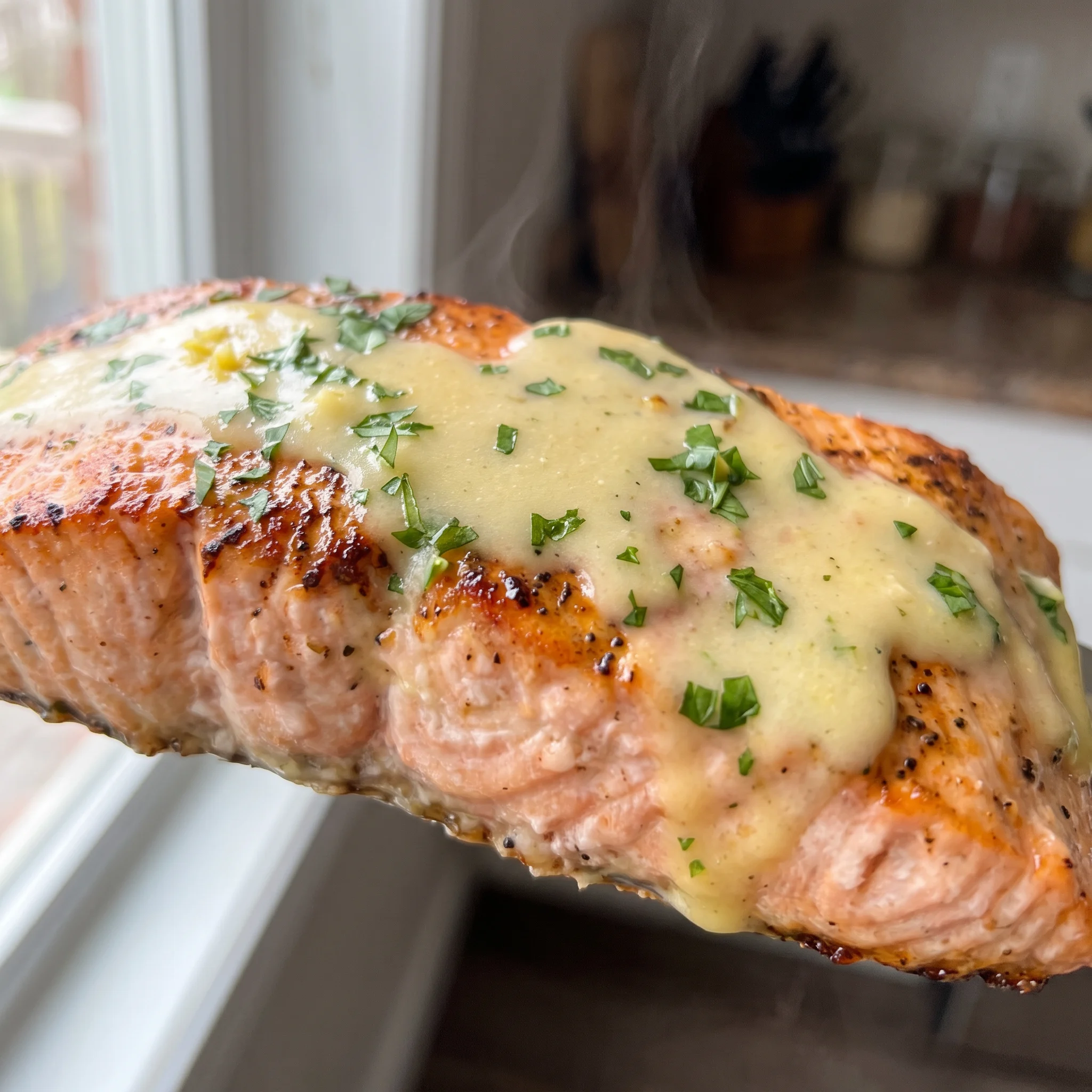
The four ingredients that decide this plate
Salmon fillet: Buy 1½ lbs of bright, firm fillets, wild-caught Sockeye, Coho, or King if you want lean and clean against the cream.
Unsalted butter: Eight tablespoons, six melted into the sauce and two held back cold in case the sauce tightens past where you want it.
Heavy cream: The real thing, not half-and-half, since the fat is what carries the lemon and thickens the sauce without breaking.
Fresh thyme: Three sprigs on the stem, not dried and not chopped, so you can fish them out once the leaves have given up their oils.
Where this bake goes right or wrong, and how to tell
Reading the sauce’s thickness before the lemon goes in
The sauce tells you when it’s ready by how it coats a spoon. Dip a spoon in and draw your finger across the back: a clean line that holds means it will cling to the fish. If the line fills in immediately, keep it at a gentle simmer.
The lemon goes in after it thickens, because acid loosens the cream. If you’ve already added the lemon and it’s thin, simmer a minute more to tighten it.
Judging doneness by feel, not just the clock
Ten to fifteen minutes is a range, not a schedule. Press the thickest part with a fork: it should give with a little resistance and flake into distinct pieces, but still look glossy inside. If it’s firm and opaque all the way through with no shine, it’s past medium.
A thermometer reads 125 to 130°F for medium, 140°F for well-done. Pull it at the lower end if you want it moist.
Why the rest matters more than the last minute in the oven
The ten-minute rest isn’t optional. As the fish sits, the juices that were pushed to the surface during baking settle back into the flesh.
Cut into it immediately and those juices run onto the parchment, leaving the fillet dry. After ten minutes, the salmon is still warm but firm enough to lift without falling apart. If you’re serving with sauce, the rest gives you time to reheat it gently.
Adjusting the sauce after it meets the fish
The sauce tastes different on the salmon than it did in the pan. The fish’s residual heat and juices can thin it slightly and mute the lemon. Taste a spoonful with a bit of salmon before you ladle it over everything.
If it’s lost its tang, add a squeeze of fresh lemon off the heat. If it’s too sharp, whisk in a knob of the reserved butter.
That’s the moment to fix it, not at the table.
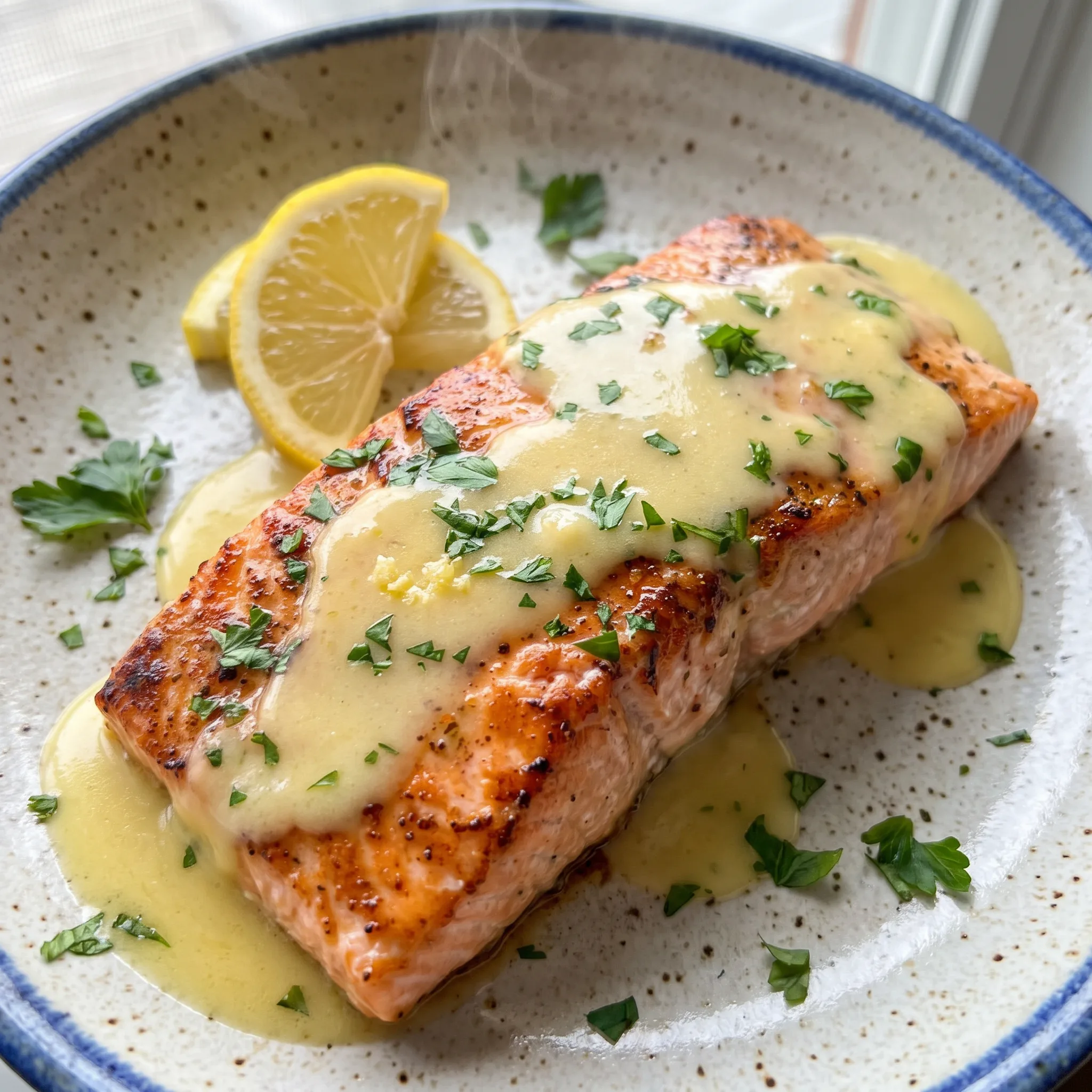
Baked Salmon with Butter Lemon Sauce
Ingredients
Method
- Opt for wild-caught salmon varieties like Sockeye, Coho, or King as your top choice. Keep in mind that farmed salmon contains more fat, whereas wild-caught offers leaner, firmer meat. When working with frozen fish, thaw it thoroughly before baking to ensure uniform cooking. Select fillets that are bright and firm, without any dull patches or off-putting smells—freshness is crucial for excellent taste.
- Use a paper towel to dry the salmon, eliminating extra moisture so seasonings stick better. Apply salt, pepper, and any optional spices liberally. To enhance flavor, allow the seasoned fish to sit for 5–10 minutes before baking, letting the spices penetrate.
- In a saucepan set over medium-low heat, melt 6 tablespoons of the butter (keep the other 2 tablespoons aside to fine-tune the consistency later if necessary). Incorporate the minced garlic, shallots, and fresh thyme sprigs. Stir from time to time and cook for 3–5 minutes, until tender and aromatic.
- Add the chicken broth and heavy cream, then let the mixture come to a gentle simmer. Continue cooking on low heat until the sauce thickens slightly and can coat the back of a spoon lightly.
- Discard the thyme sprigs, then whisk in the lemon juice to add brightness. Fold in the chopped parsley or basil, and season with salt and pepper to taste. Adjust the seasoning if needed; the sauce should be creamy, tangy, and full of flavor—ready to drizzle over the baked salmon. For a smoother, more velvety texture, whisk the sauce constantly while incorporating the cream to avoid curdling.
- Prepare a baking sheet by lining it with parchment paper for quick cleanup. Arrange the salmon fillets on the lined sheet. Brush or drizzle with a small amount of oil, then season with salt and pepper for extra taste.
- Place in a preheated oven at 375°F (190°C) and bake for 10–15 minutes, depending on how thick the fillets are. The salmon should become opaque and flaky, just beyond the translucent stage, ensuring it stays moist and tender without overcooking.
- When done, take it out of the oven and let it rest for a couple of minutes before serving with the butter lemon herb sauce. To ensure perfectly moist and flaky salmon, test doneness by pressing gently with a fork—if it flakes easily but still appears juicy, it’s ready. For greater accuracy, use a meat thermometer and target an internal temperature of 125–130°F (52–54°C) for medium and 140°F (60°C) for well-done.
- Begin with a warm portion of Jasmine rice or your chosen side. Top it with the perfectly baked salmon fillet.
- Ladle the creamy Butter Lemon Herb Sauce generously over the salmon, allowing it to soak into the rice for added flavor. Scatter fresh herbs and serve with lemon wedges on the side for an extra citrusy twist.
- Take a fork and enjoy every bite—this is a meal worth savoring. For a beautiful presentation, garnish lightly with additional lemon zest and a sprinkle of red pepper flakes to add color and a touch of heat.
Storing the Salmon and the Sauce Apart
Keep the fish and the sauce in separate containers, and keep them in the fridge no more than three days. That window comes from the cream and the cooked fish, both of which turn faster than the rice does. The sauce thickens hard when cold, because butter and cream set up solid, and it can break when you reheat it too fast.
Warm it in a small pan over low heat, stirring, until it loosens and goes glossy again; a hard boil will split it. Reheat salmon covered at 300°F just until it’s warm through, or eat it cold over greens. Either way it won’t be as moist as the day it baked, so plan on the sauce carrying it.
The sauce holds its best texture for two days. Freeze neither the sauce nor the assembled plate.
The fish alone freezes acceptably if you must, wrapped tight, up to a month. Eat the bake within an hour of coming out of the oven for the moistest fish and the glossiest sauce; scatter the herbs and zest right before it hits the table, never earlier.
Tips
- Press the thickest part of the fillet with your finger, not a fork, about a minute before the timer ends. A fork tears the flakes and lets juice escape before the rest. Your finger reads the spring: if the flesh pushes back with slight resistance and feels firm at the edges but soft in the center, pull the pan. If it feels spongy all the way through, give it two more minutes. This matters here because the sauce is finished separately and waits for the fish, so the salmon is the one thing that can overcook while you are not looking.
- If your fillets are uneven in thickness, fold the thin tail section under itself before it goes on the parchment so the whole piece cooks at the same rate. A thin tail hits 130°F in six or seven minutes while a thick center needs twelve to fifteen, and one dry end ruins the plate. Folding tucks the thin part against the thick part and buys you a single pull time for the whole fillet.
Where a swap helps and where it quietly ruins the sauce
Heavy cream: Full-fat coconut milk or a dairy-free creamer. The sauce will taste of coconut, which fights the lemon and thyme.
It also thins faster; simmer it a minute longer before adding the lemon. If you want dairy-free without the coconut flavor, use unsweetened oat creamer and accept a slightly sweeter finish. Half-and-half is not a good substitute because it lacks the fat to thicken, so the sauce stays watery and the lemon tastes sharp instead of bright.
Unsalted butter: A plant butter or olive oil. Plant butter melts and emulsifies like the real thing, but many brands are salted, so cut the added salt in the sauce. Olive oil won’t thicken the sauce the same way; it stays liquid and pools on the plate.
If you go that route, reduce the broth to ⅓ cup so the sauce isn’t too loose.
Chicken broth: Vegetable broth or dry white wine. Vegetable broth works one-to-one but can taste sweeter, so taste before you add the lemon. White wine adds acidity; use ½ cup and simmer an extra minute to cook off the alcohol, then reduce the lemon juice to 1 tablespoon so the sauce doesn’t turn sour.
Lemon: Lime or a splash of white wine vinegar. Lime shifts the whole sauce toward Thai or Mexican, which can be good but no longer matches the thyme.
White wine vinegar is harsher; start with 1 tablespoon and add more only after tasting. If you’re out of both, skip the acid entirely and stir in a tablespoon of capers or chopped green olives for a briny tang that won’t curdle the cream.
Heavy cream and butter form an emulsion stabilized by milk proteins. When lemon juice, an acid, is whisked into a simmering sauce, the drop in pH neutralizes the proteins’ repulsive charges, allowing them to clump and squeeze out fat. The result is a grainy, split sauce rather than a smooth, silky one.
Frequently Asked Questions
Can I make the butter lemon sauce ahead of time?
Yes, but keep it separate from the salmon and reheat gently so it doesn’t break. The sauce thickens hard in the fridge because the butter and cream set up, and a hard boil will split it; warm it in a small pan over low heat, stirring, until it loosens and goes glossy again. It holds its best texture for two days, so if you’re planning ahead, make it the day before or the morning of.
Don’t freeze it.
How do I prevent the salmon from drying out in the oven?
Pull it the moment it’s just opaque and still glossy at the center. The fillets are done when they flake under a fork but look juicy inside, not when they’re firm and matte all the way through. That last minute or two is where moisture goes.
Also, don’t skip the short rest after baking; it lets the juices settle back into the flesh instead of running onto the parchment.
What internal temperature should I aim for to get cooked salmon?
For medium, aim for 125, 130°F; for well-done, 140°F. The lower end gives you the moistest fish, especially if you’re ladling sauce over it. If you don’t have a thermometer, press the thickest part with a fork: it should give a little resistance and flake into distinct pieces, but still look shiny inside.
Firm and opaque with no shine means you’ve gone past medium.
How long should I let the salmon rest before serving?
Ten minutes. That’s the rest time on the card, and it’s not optional: during that time the juices that were pushed to the surface during baking settle back into the flesh. Cut in immediately and they run onto the parchment, leaving the fillet dry.
After ten minutes the salmon is still warm but firm enough to lift without falling apart, and you have a window to reheat the sauce gently.
What sides go best with baked salmon with butter lemon sauce?
Warm jasmine rice is the natural fit because it catches the sauce that would otherwise stay on the plate. A shallow bowl works better than a flat one: rice on the bottom, salmon on top, sauce ladled over both so it soaks down. If you’d rather skip rice, something plain and starchy like crusty bread or boiled potatoes does the same job.
Keep the side neutral; the sauce is already rich and tangy, so you don’t want a second strong flavor competing.
